The Churches of Paris : A Thousand Years of Stone, Power, and Urban Memory
Paris is home to more than a hundred churches, yet their significance extends far beyond the spiritual. They chart the city’s evolution, its crises and reconstructions, its political ambitions and social fractures.
From the earliest Christian basilicas to the monumental projects of the 19th century, each era has left its mark on the city’s religious landscape.
Exploring the churches of Paris is one of the most revealing ways to understand how the capital grew, what it endured, and how it continues to reinvent itself.
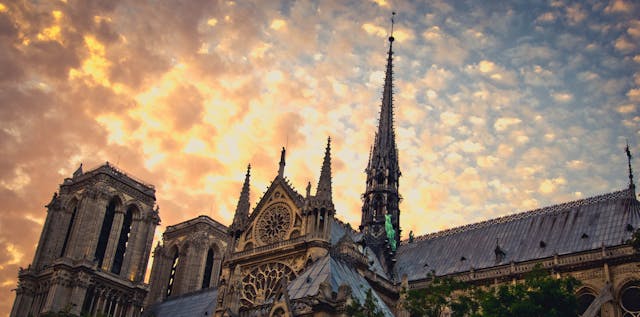
A Timeline Through the Centuries : How Paris Built Its Sacred Landscape
Origins : From the 4th to the 12th Century
Christianity took root early in Paris, and the first churches appeared alongside the Roman city.
- Saint‑Germain‑des‑Prés (6th century) : one of the oldest abbeys in France, built over a Merovingian necropolis.
- Saint‑Pierre‑de‑Montmartre (12th century) : founded by Louis VI, it remains one of the oldest surviving churches on the Butte.
Did you know?
Beneath today’s Parvis Notre‑Dame lie the remains of a 4th‑century basilica, proof that Paris was already a major Christian center in late antiquity.
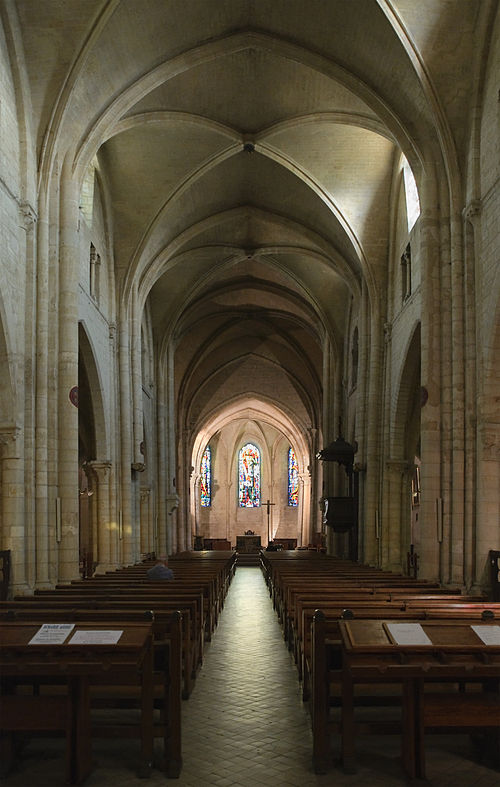
The Middle Ages : Monumental Ambition (12th–14th Century)
This was the golden age of Gothic architecture.
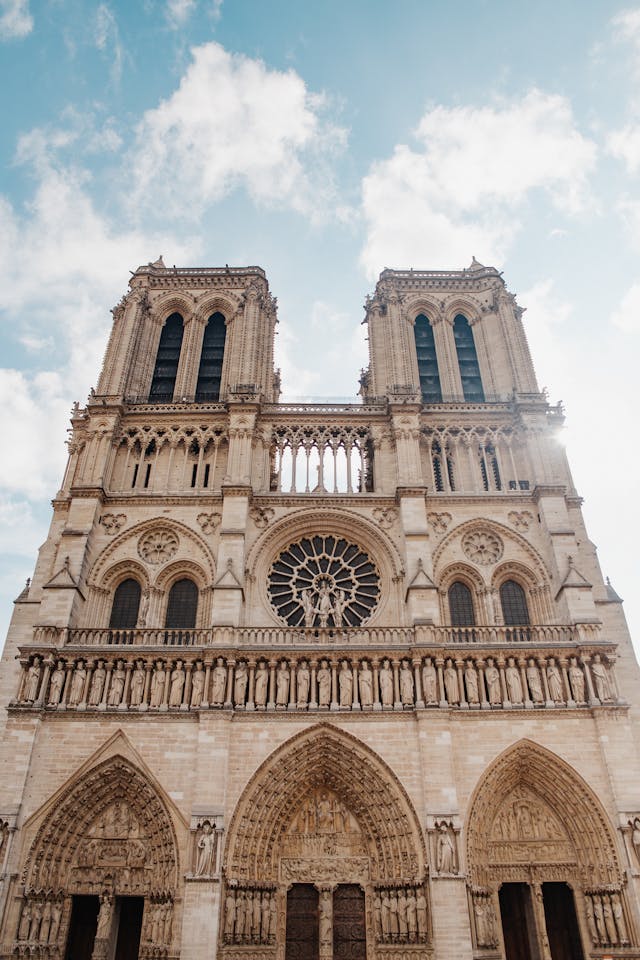
- Notre‑Dame de Paris (1163–1345) : a vast, multi‑generational project symbolizing the power of the medieval bishopric.
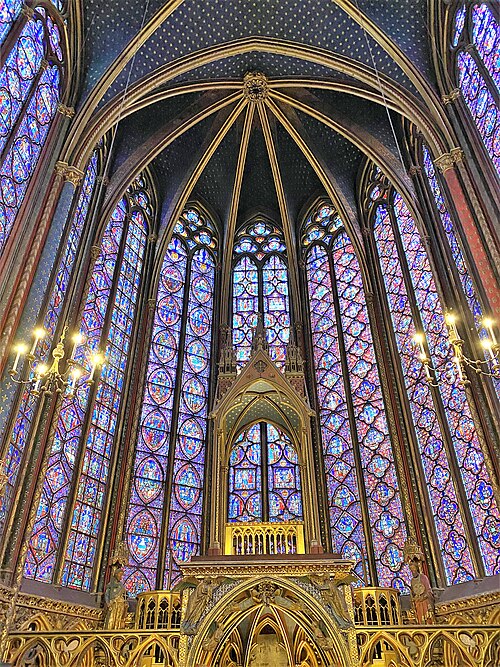
- Sainte‑Chapelle (1248) : a jewel‑box of stained glass built to house the Crown of Thorns.
- Saint‑Séverin and Saint‑Gervais : parish churches at the heart of medieval life.
Anecdote :
The Sainte‑Chapelle was completed in just seven years, an extraordinary feat intended to showcase the prestige of King Louis IX.
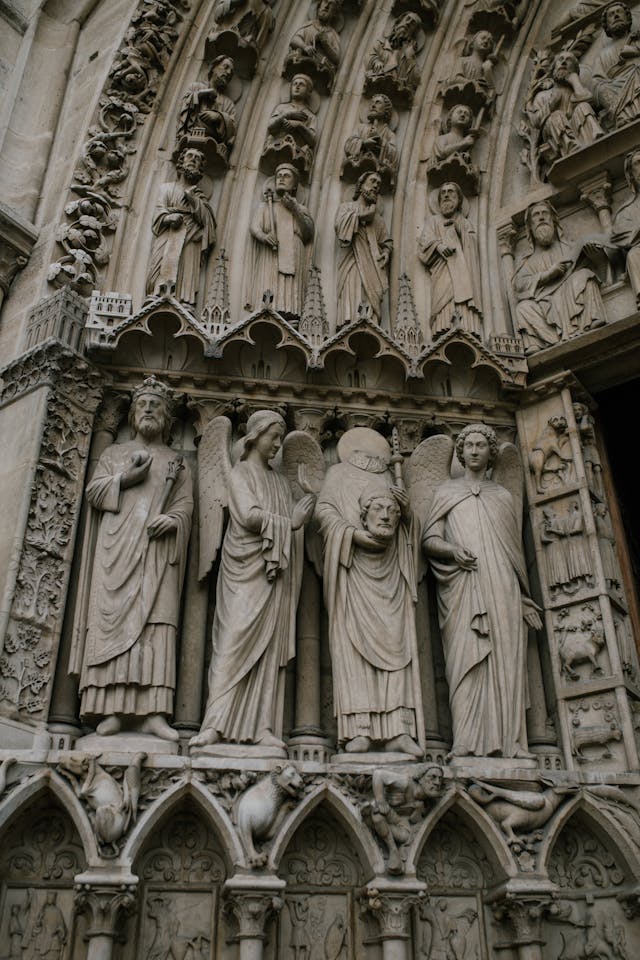
Renaissance to Classicism : Paris as a Royal Capital (16th–18th Century)
Churches became instruments of royal and ecclesiastical power.
- Saint‑Eustache : a striking blend of Gothic structure and Renaissance ornament.
- Saint‑Sulpice : a monumental façade reflecting the influence of the Paris clergy.
- La Madeleine : a building whose purpose shifted repeatedly with political change.
Anecdote :
La Madeleine was successively planned as a parish church, a revolutionary temple, a Napoleonic temple of glory, and finally a church — a perfect mirror of France’s political instability.
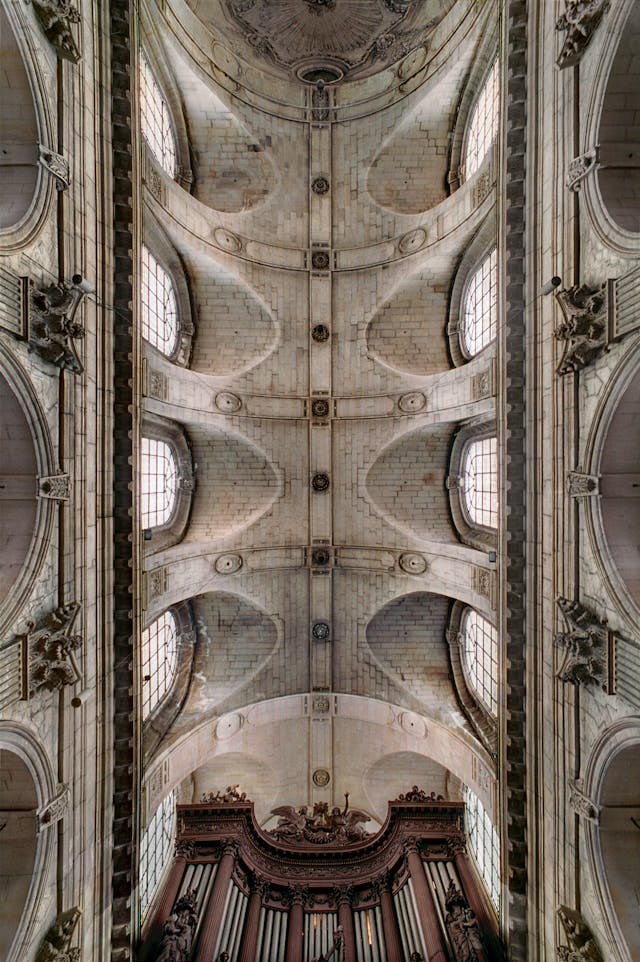
The 19th Century : Reconstruction, Modernization, and Political Tension
The century of Haussmann was also a century of religious debate.
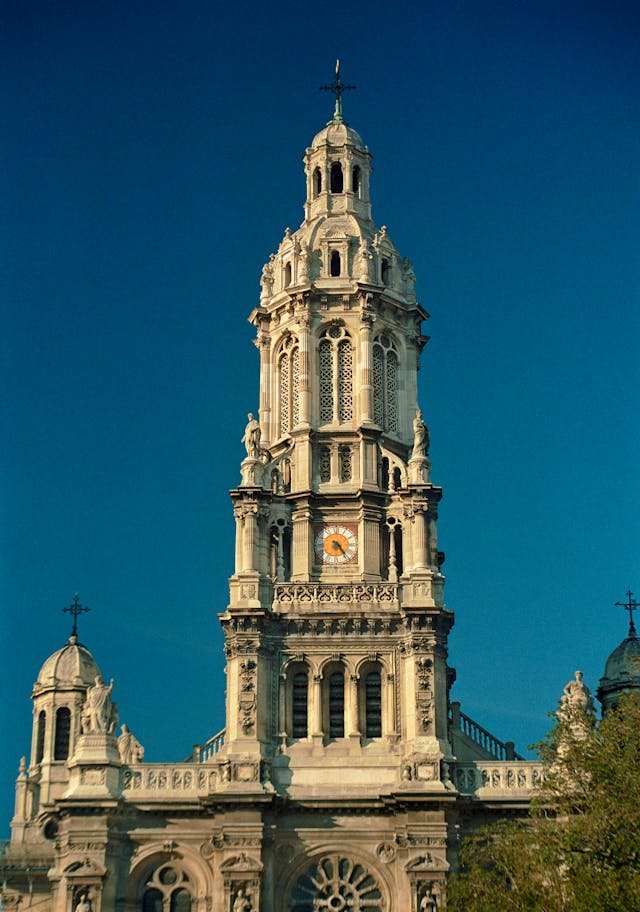
- La Trinité, Saint‑Ambroise, Saint‑Augustin : new churches built to serve the expanding city.
- Notre‑Dame‑de‑Lorette : emblematic of the “new Paris” of the July Monarchy.
- Sacré‑Cœur de Montmartre (1875–1914) : perhaps the most politically charged monument in Paris.
Historical insight :
The Sacré‑Cœur is often linked to the trauma of the 1871 Commune, but its origin actually dates to 1870, during the Franco‑Prussian War, when two Catholic notables vowed to build a basilica if France was spared.
The project was later appropriated by political factions, which explains the monument’s enduring controversies.
The 20th Century : Modernity, Concrete, and Liturgical Renewal
The century brought bold architectural experiments.
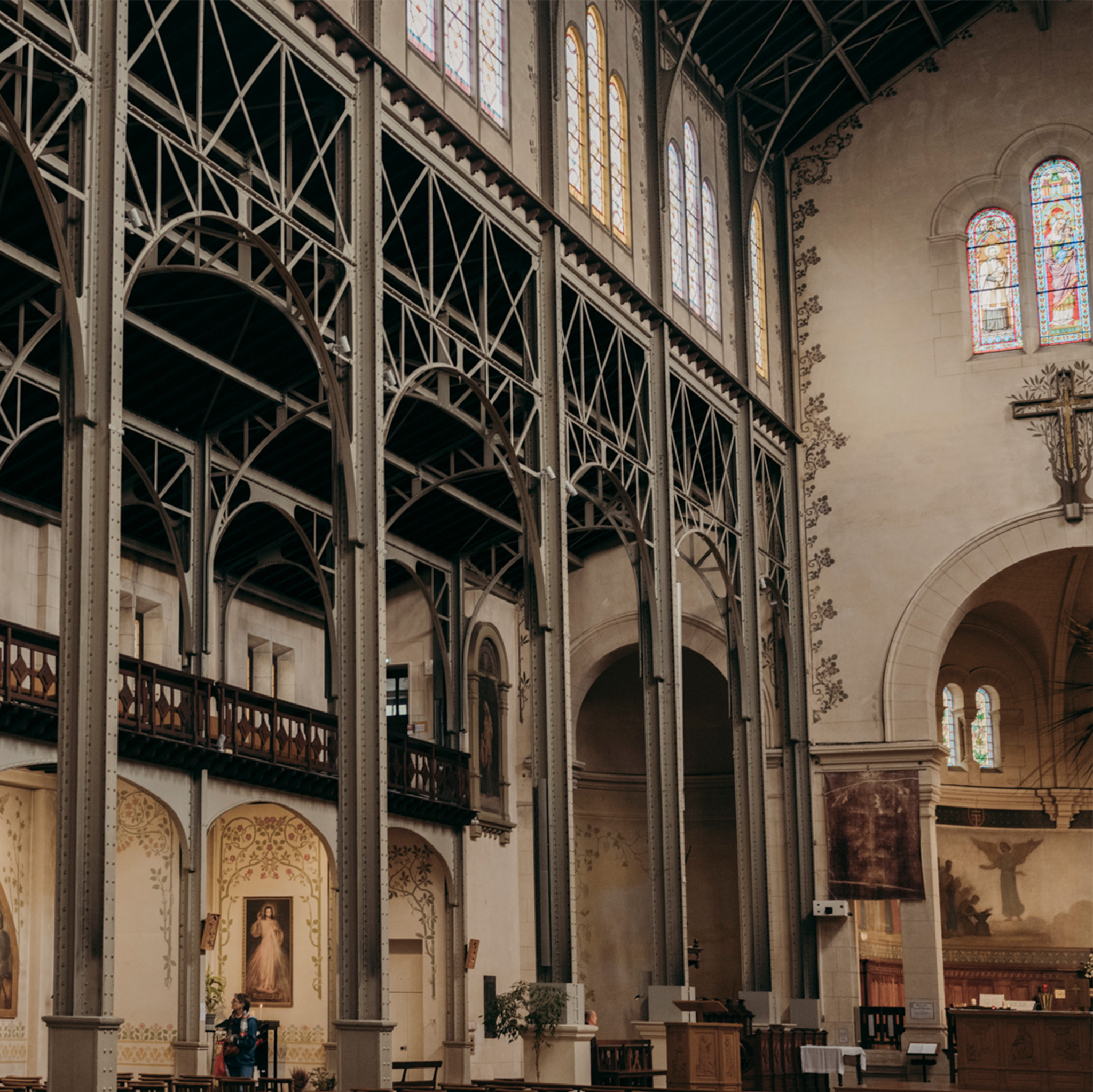
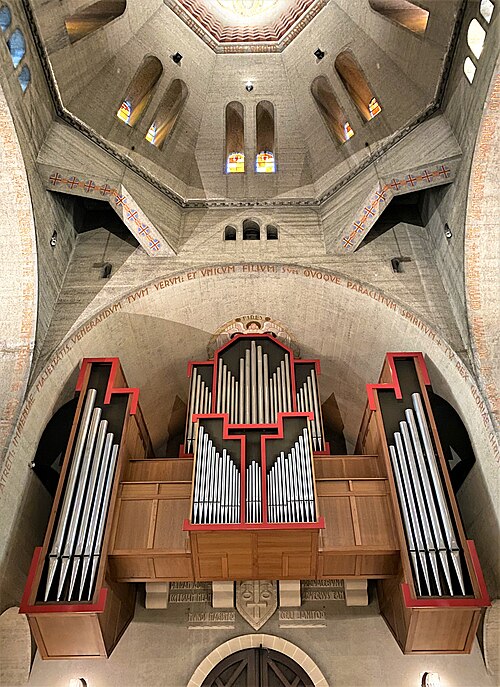
- Notre‑Dame‑du‑Raincy (1923) : Auguste Perret’s pioneering concrete church, nicknamed “the concrete Sainte‑Chapelle.”
- Saint‑Esprit (1935) : a vast dome inspired by Hagia Sophia.
- Saint‑Pierre‑de‑Chaillot (1938) : a confident Art Deco statement.
- Notre‑Dame‑de‑l’Arche‑d’Alliance (1998) : contemporary architecture in wood and metal.
Anecdote :
Notre‑Dame‑du‑Raincy was built in one year, thanks to Perret’s innovative use of reinforced concrete.
Did You Know ? The Surprising Laws That Once Governed the Space Around Parisian Churches
For centuries, churches shaped not only spiritual life but also urban regulation. Their surroundings were governed by rules that may seem surprising today.
“Silence Zones” Around Churches and Alcohol Sales Restrictions
The immediate surroundings of churches were protected areas.
Banned activities included :
- street cries,
- itinerant vendors,
- noisy gatherings.
Until the 19th century, opening a tavern or wine shop too close to a church was prohibited.
The aim : prevent worshippers from encountering “profane excess” as they left mass.
Anecdote :
Some tavern‑keepers bypassed the rule by opening behind the apse, out of the clergy’s line of sight.
Paris cemeteries, public health challenge and “Bench rights”
Until the late 18th century, each church had its own cemetery.
Famous case :
The Cemetery of the Innocents near Saint‑Eustache was closed in 1780 after the walls of nearby cellars collapsed under the pressure of accumulated bones.
The remains were transferred to the Catacombs.
Until the 19th century, parishioners paid for the right to sit.
Prime seating near the choir was reserved for influential families.
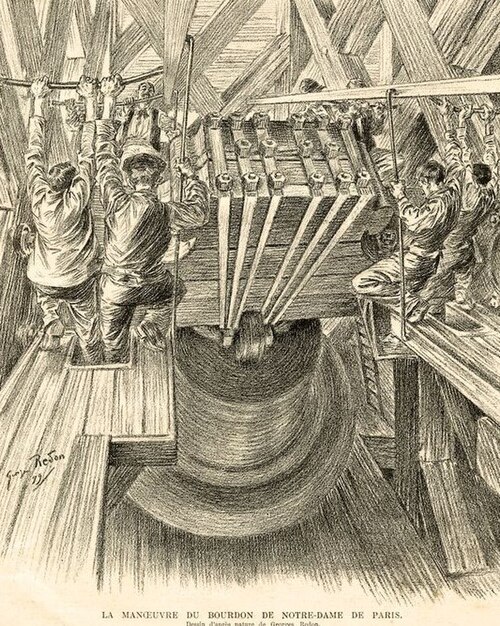
Church Bells as Social Regulators
Bells marked :
- work hours,
- curfews,
- alerts (fires, floods, uprisings),
- public announcements.
Anecdote :
During the 1871 Commune, several bells were melted down to make cannons.
What Parisian Churches Reveal : Power, Crisis, and Renewal
Political Markers
Each major church corresponds to a moment of tension or reconstruction :
- Notre‑Dame : episcopal authority.
- Sainte‑Chapelle : royal prestige.
- La Madeleine : political instability.
- Sacré‑Cœur : ideological fracture.
Urban Anchors
Churches structured neighborhoods :
- markets,
- schools,
- squares,
- major streets.
Places of Memory
They preserve :
- masterpieces of art,
- traces of the Revolution,
- bullet marks from the Commune,
- Merovingian crypts.
Understanding Paris Through Its Churches
To explore the churches of Paris is to walk through fifteen centuries of history in a single city.
Some are world‑famous, others almost invisible — yet each reveals a facet of the capital’s identity.
They bear witness to ambition, conflict, reconstruction, and belief.
And for travelers who want to go beyond the façades — to understand the political context, the stylistic ruptures, the forgotten anecdotes, and the urban logic behind each monument — I offer guided experiences that bring these stories to life.
With a precise, informed, and accessible approach, I help you read Paris in depth, through the places where its history is most clearly written.
When you’re ready to discover Paris through its churches, I’ll be delighted to guide you.