1910: The Great Flood of Paris, When the Seine Rose and the City Held Its Breath
Some events leave a permanent imprint on a city’s identity.
The Great Flood of 1910 is one of those moments, a slow, relentless rise of the Seine that transformed Paris into a surreal landscape of footbridges, boats, and flooded boulevards.
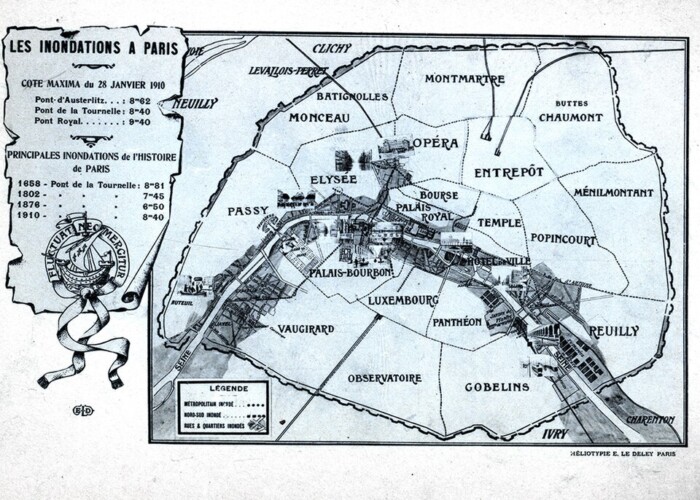
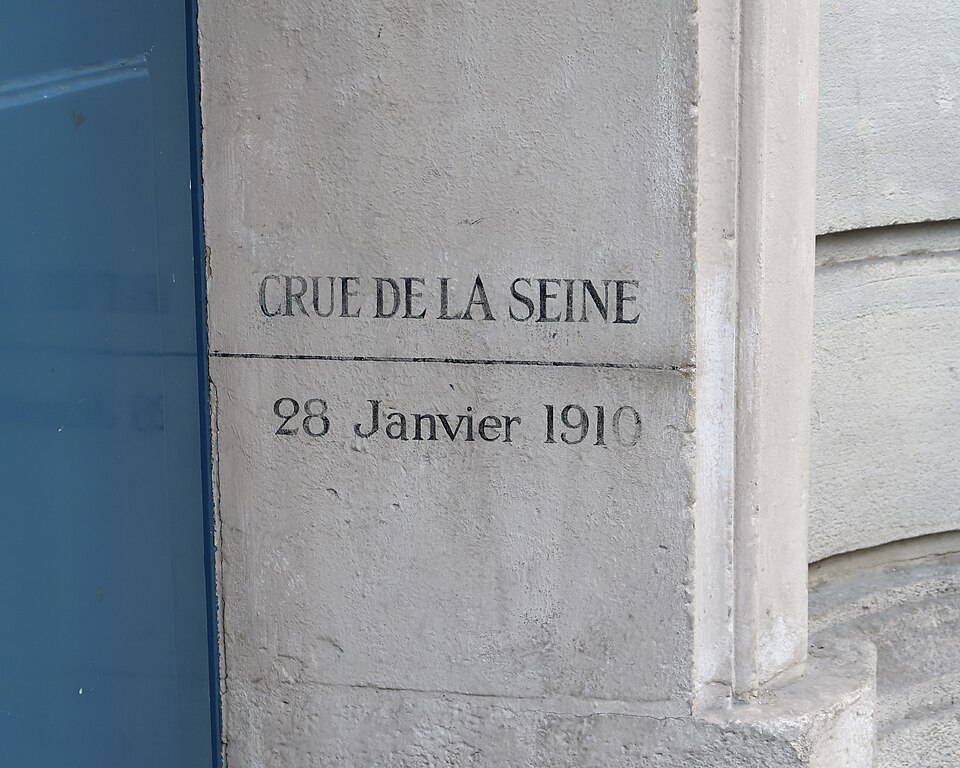
On 28 January 1910, the Seine reached 8.62 metres at Pont d’Austerlitz, a level that remains the reference point for flood planning in Paris.
It wasn’t sudden. It wasn’t violent.
It was a quiet takeover, and perhaps that is what made it unforgettable.
A Winter of Saturation: How the 1910 Seine Flood Began
The winter of 1909–1910 was exceptionally wet.
Weeks of heavy rain saturated the soil across the Paris basin.
The Yonne, Marne, and Loing, the Seine’s major tributaries, all overflowed at the same time.
The river rose first by centimeters, then by entire steps.
On 18 January, the first signs of flooding appeared.
By 28 January, Paris had entered a different world.
A City Transformed: Daily Life During the Great Flood of Paris
The 1910 flood did not engulf Paris in a single dramatic wave.
Instead, it seeped into the city, through basements, tunnels, sewers, and underground galleries.
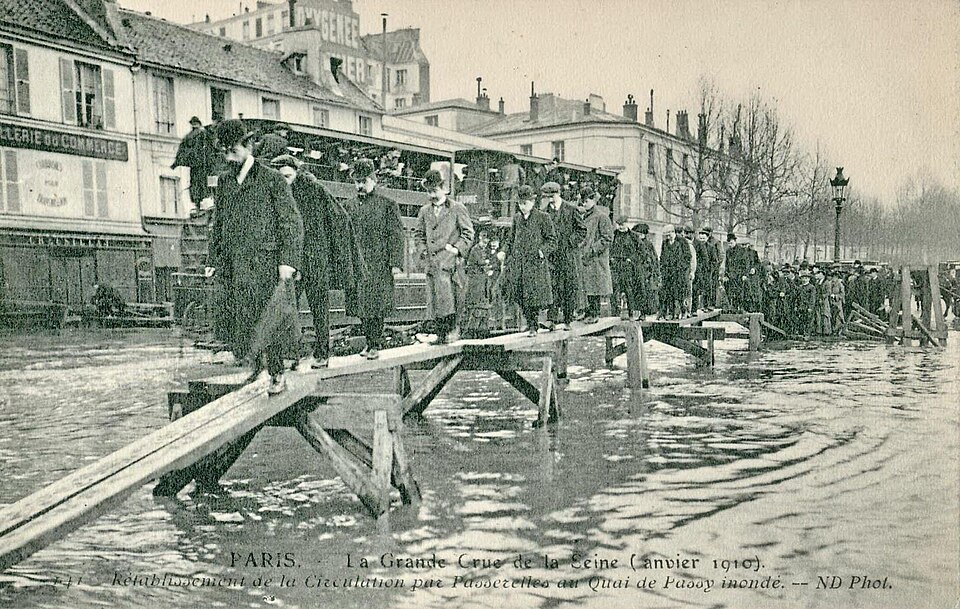
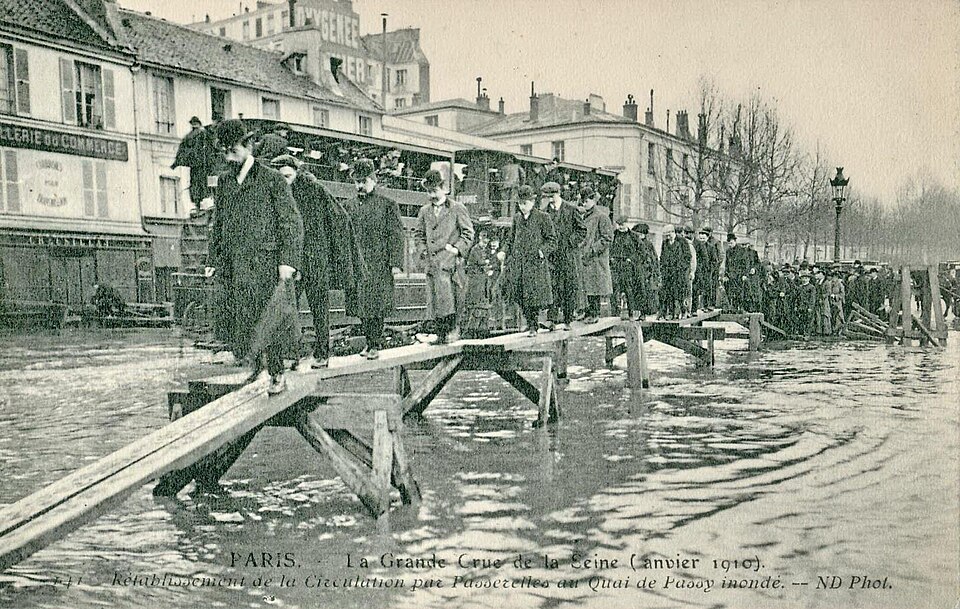
Footbridges Over the Streets:
Wooden walkways were installed across entire neighborhoods.
Parisians walked above the water as if crossing a temporary stage.
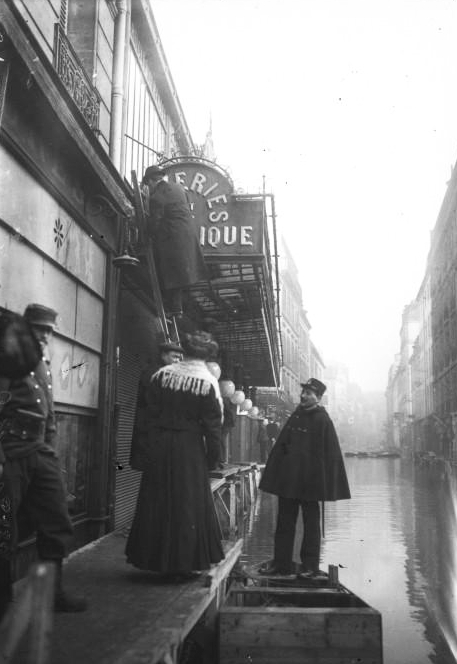
Boats Instead of Carriages:
Residents rowed to their front doors.
Crossing the street felt like crossing a canal.
The Metro Fell Silent:
Tunnels flooded.
Electric cables failed.
Paris rediscovered slowness.
Gare d’Orsay Underwater:
The elegant station, today the Musée d’Orsay, saw its platforms swallowed by the rising river.
Trains stopped. Schedules dissolved.
Shops Closed, Workshops Drowned:
Newspapers struggled to print.
Cafés served coffee above the waterline.
Some Parisians fished in their own living rooms.
The Zouave of Pont de l’Alma: Paris’s Most Beloved Flood Gauge
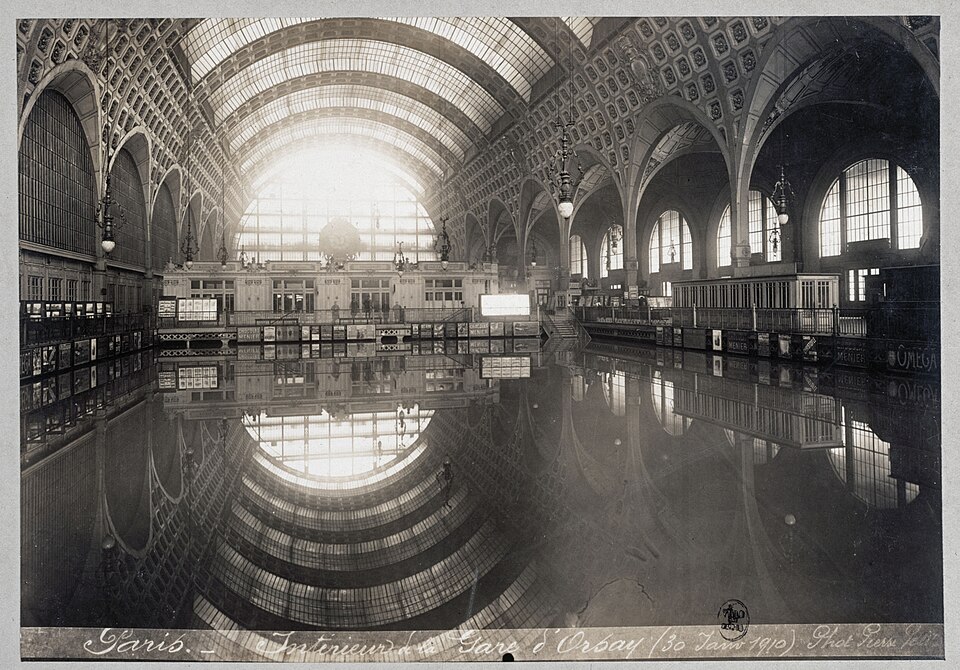
If one figure embodies the memory of the 1910 flood, it is the Zouave of Pont de l’Alma.
In 1910, the water rose to his chest, an image that became iconic.
Since then, Parisians have watched him like a living barometer:
In the popular imagination: water at his feet means curiosity; at his knees, concern; any higher, and the city collectively holds its breath.
A Little‑Known Fact: The Zouave Was Moved
During the reconstruction of the bridge in the 1970s, the statue was relocated and positioned higher.
Today’s water levels do not correspond exactly to those of 1910, but the tradition remains.
The Zouave is still the emotional gauge of Paris.
The Social and Economic Impact of the 1910 Flood
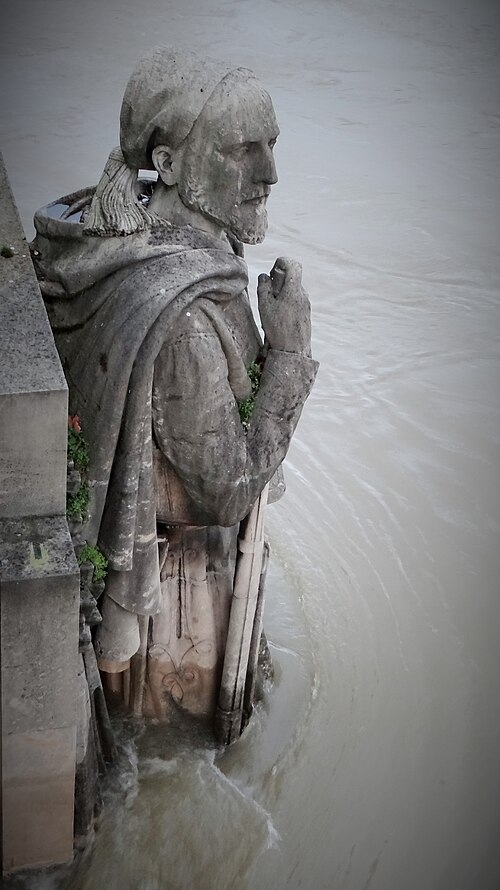
The flood lasted more than two weeks.
Its consequences lasted months.
- Thousands of homes were affected or temporarily uninhabitable
- Entire neighbourhoods experienced power cuts
- Archives, libraries and workshops were damaged or put out of use
- Businesses were severely disrupted
- Infrastructure suffered long‑term damage
Modern estimates suggest that a similar event today would cost tens of billions of euros, due to the density and complexity of modern Paris.
Why the 1910 Seine Flood Still Shapes Paris Today
The Great Flood of Paris is not a historical curiosity.
It remains a reference scenario for flood models, emergency plans and simulations across the Paris region.
Urban planners, hydrologists, museum directors, and transport authorities all work with the same question:
“If 1910 happened again, how would Paris respond?”
A Century of Quiet Protections
Paris did not try to dominate the Seine after 1910.
It learned to negotiate with it.
- Reservoir lakes upstream (Seine, Marne, Aube, Yonne) help reduce peak flood levels
- Continuous monitoring through Vigicrues tracks the river like a living organism
- Regular simulations prepare the city for a 1910‑type scenario
These measures are discreet, almost invisible, but essential.
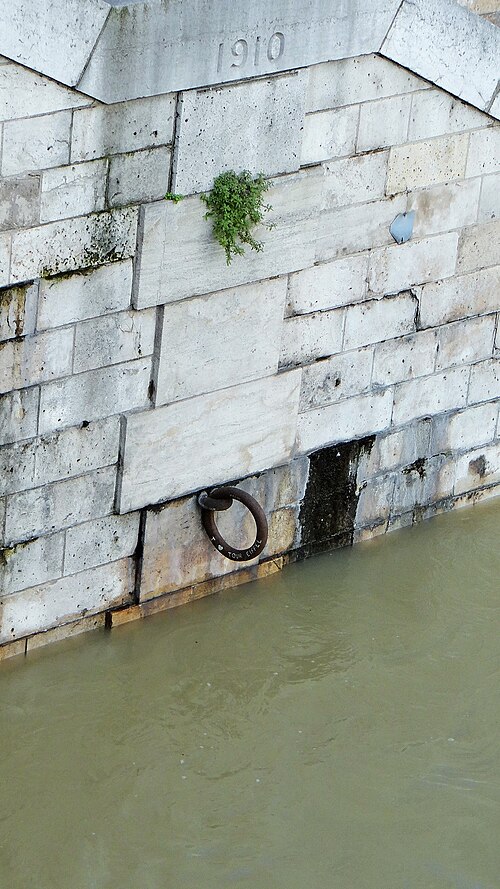
1910 as a Mirror for the Present
The Great Flood of 1910 is not a dusty chapter of Parisian history.
It is a reminder that a river is never just a river, and that Paris is, before anything else, a fluvial city.
The Seine is not a threat.
It is a presence.
Magnificent, capricious, indomitable.
A presence that may one day rise again, quietly, insistently, under the watchful eyes of the Zouave.
If you want to read Paris through its hidden layers — its floods, its revolutions, its quiet reinventions — Bespoke Paris offers private tours in Paris designed to reveal the city as it truly is.