The Rings of Paris : Understanding the Borders That Shaped the City
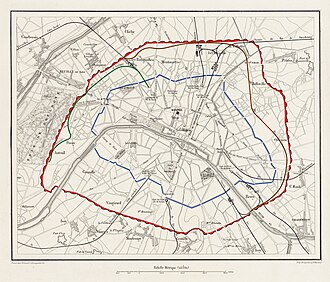
On a map, Paris appears neatly contained within a single outline. On the ground, its borders tell a far more layered story. Over the past two centuries, the capital has been encircled by successive rings, fiscal walls, military fortifications, informal settlements, and finally the boulevard périphérique.
Exploring these edges is one of the most revealing ways to understand how Paris grew, how it functions today, and how it continues to evolve.
Two Centuries of Borders : A Legacy Still Visible
Paris has never stopped redefining its limits. Each ring has left traces that remain legible in the urban landscape.
The Wall of the Farmers-General (1784–1791)
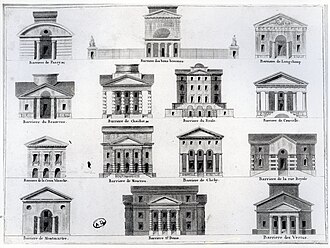
Built not for defense but for taxation, this wall allowed the city to collect the octroi on goods entering Paris.
It featured sixty monumental gates, several of which still stand today :
- the Barrière d’Enfer at Denfert‑Rochereau,
- the Barrière du Trône at Nation,
- the Barrière Saint‑Martin.
Anecdote : Parisians quickly learned to bypass the wall to avoid paying the tax, creating informal paths around the city, routes that would later inspire the Grands Boulevards.
The Thiers Fortifications (1841–1844)
The last defensive wall built around Paris, stretching 33 km with bastions, ditches, and a wide glacis.
Dismantled after 1919, it gave way to :
- Boulevards des Maréchaux,
- Early 20th‑century HBM social housing,
- Sports fields and public gardens installed on the former glacis.
Anecdote : The fortifications were so imposing that some neighborhoods lived “with their back to Paris”, oriented more toward the suburbs than toward the capital itself.

The Zone : A Forgotten Territory That Shaped Modern Paris
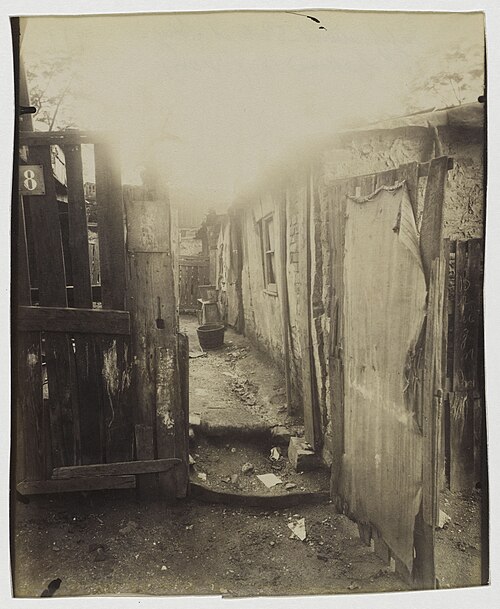
Between the fortifications and the administrative boundary lay a 250‑meter‑wide no man’s land known simply as la Zone.
Officially unbuildable, it gradually filled with :
- makeshift wooden houses,
- workshops,
- ragpickers’ settlements,
- families seeking the lowest possible rents.
Anecdote : The word zonard, still used in French today, originally referred to the inhabitants of this fringe territory.
Despite its poverty, the Zone also hosted guinguettes, open‑air dance floors, and a vibrant working‑class culture.
The Boulevard Périphérique (1973)
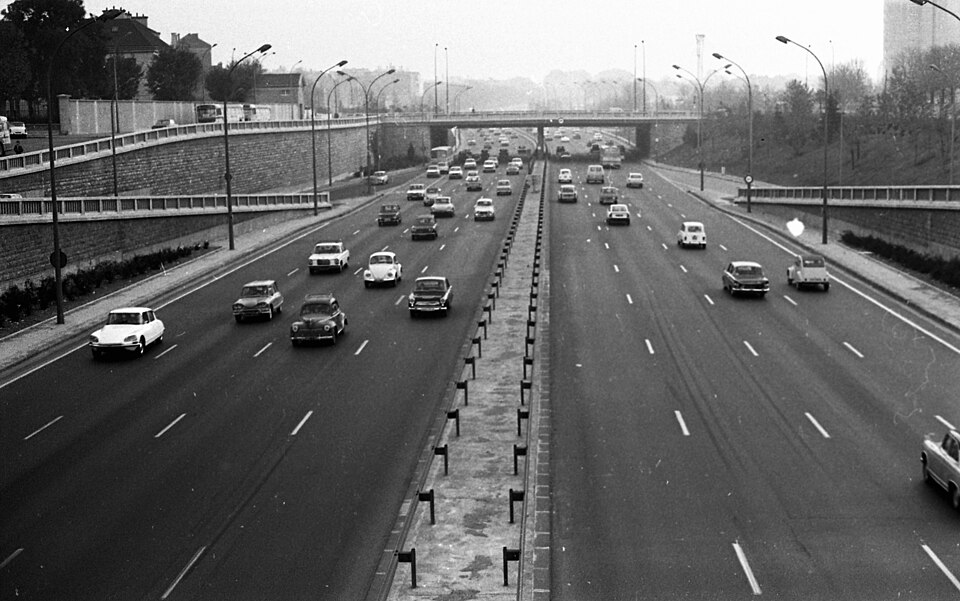
Built directly on the footprint of the Zone, the périphérique became the most visible, and most debated , border of Paris.
At 35 km long and carrying up to 1.1 million vehicles per day, it remains one of Europe’s busiest roads.
Anecdote : When inaugurated, the périphérique was celebrated as a symbol of modernity. Today, it is at the center of major urban debates, with plans for partial coverage and reintegration into the Grand Paris metropolitan fabric.
Why These Borders Matter Today
For urbanists, historians, and curious travelers, the rings of Paris are not peripheral at all , they are strategic zones where the city transforms most rapidly.
Spaces of Transition
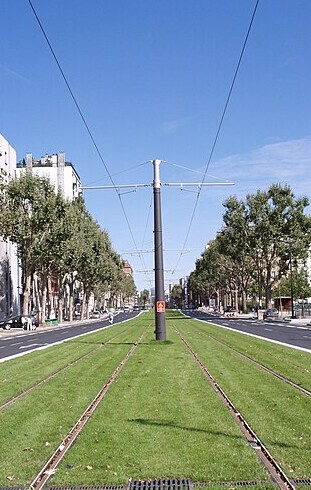
The borders concentrate mobility : tramways, buses, ring roads, cycle lanes, and major interchange hubs.
Immediate Urban Contrasts
Within a few steps, one moves from :
- Haussmannian avenues to 1970s housing blocks,
- quiet residential streets to major traffic arteries,
- local shops to large-scale infrastructure.
Laboratories of the Future City
The rings host many of Paris’s most ambitious projects:
- Chapelle International, Bercy‑Charenton, and other new districts, reshaping former industrial land into mixed‑use neighborhoods.
- The Paris Court of Justice at Porte de Clichy, a landmark of the city’s judicial and architectural renewal.
- The Adidas Arena at Porte de la Chapelle, anchoring a broader transformation of the northern gateways.
- Ongoing studies to transform or cover sections of the périphérique, aiming to soften the physical and psychological barrier between Paris and its inner suburbs.
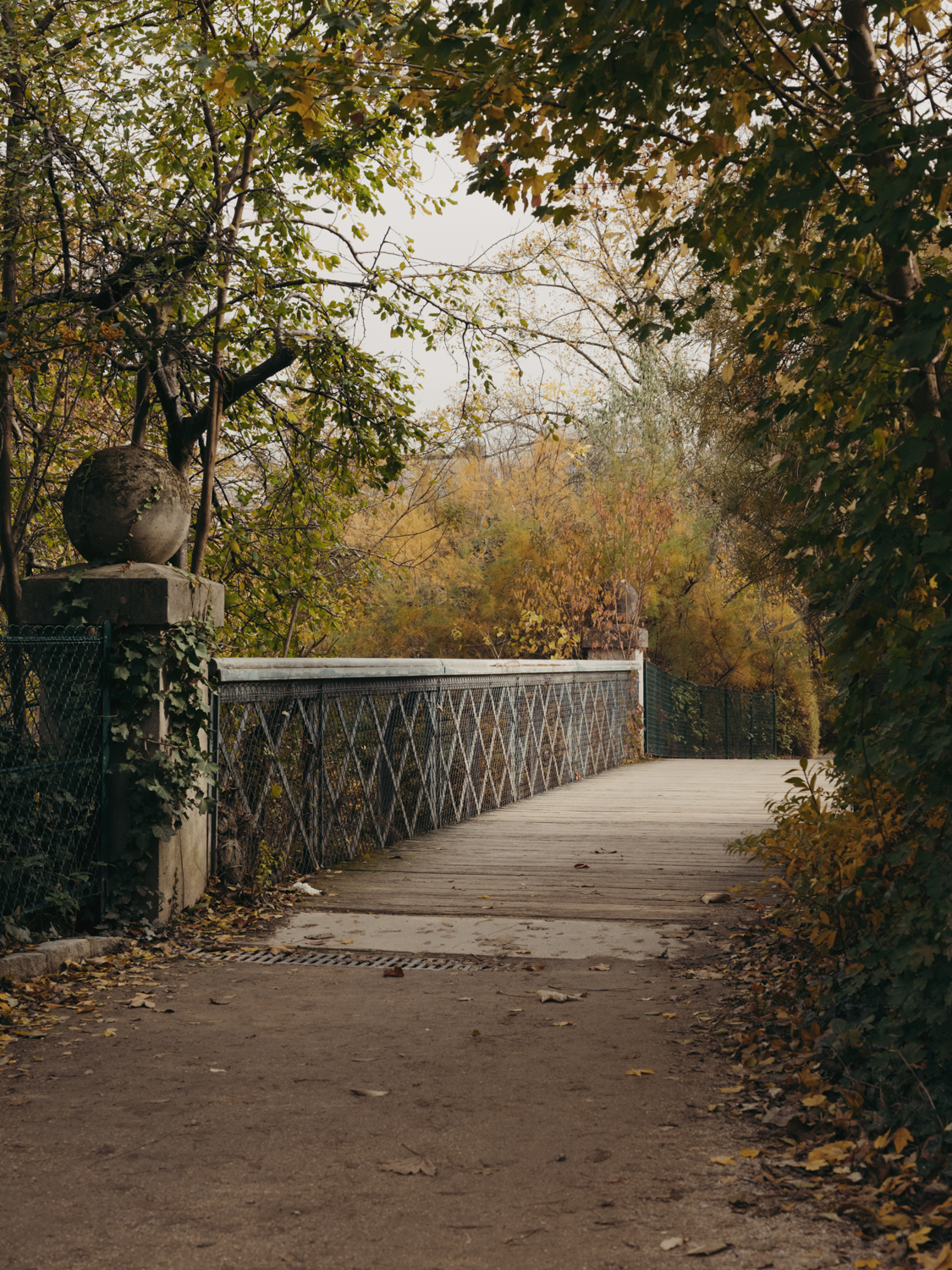
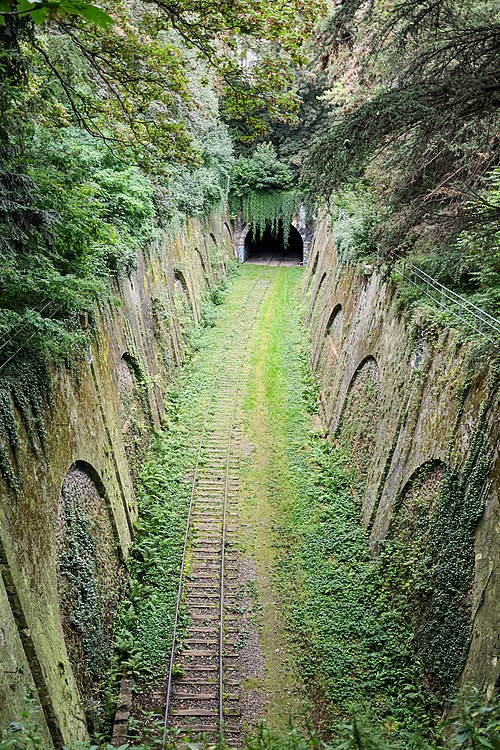
- The Petite Ceinture walking path, a former 19th‑century railway line gradually reopened as a linear park, offering a rare, elevated perspective on the city’s edges – the kind of architectural detail our architectural tours bring to life.
The Gates of Paris : Micro‑Districts with Distinct Identities
Each porte functions as a small city in itself.
- Porte de Clignancourt : student flows, the flea market, tramway connections.
- Porte de Vincennes : a major crossroads linking Paris, Saint‑Mandé, and Vincennes.
- Porte de la Chapelle : a district undergoing profound transformation.
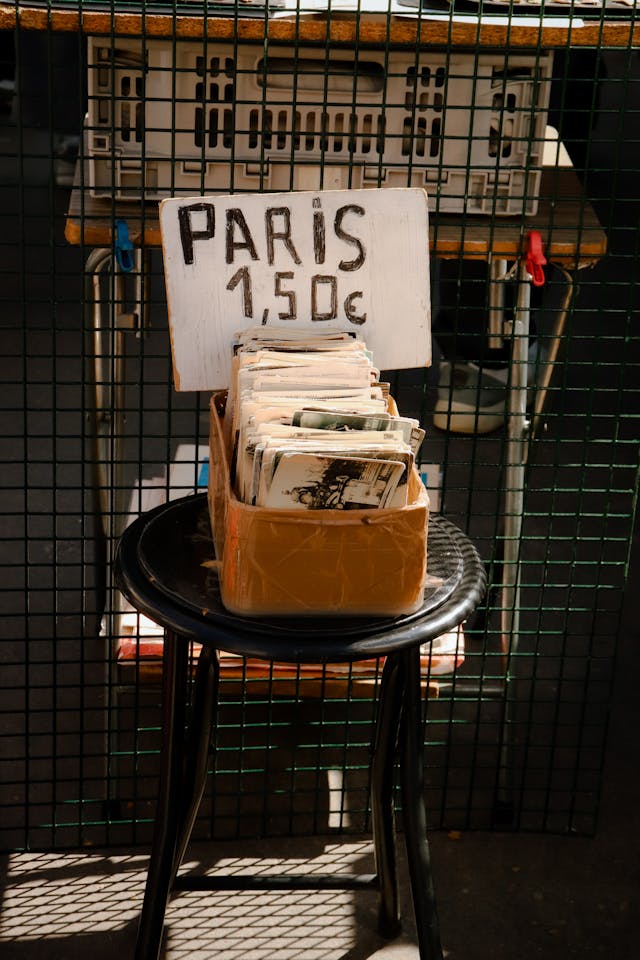
- Porte de Vanves : a beloved weekend flea market with a village feel.
- Porte de Clichy : reshaped by the new judicial complex and urban renewal.
Exploring the gates is like walking through a series of urban micro‑climates.
The Borders of Paris as a Lens on the Grand Paris
Exploring the rings of Paris means observing the city in motion.
These borders, once perceived as hard limits, are now becoming zones of connection, opportunity, and transformation.
They reveal what Paris has been, what it is, and what it is preparing to become.
And for those who want to go beyond the surface , to read the city through its hidden layers, its forgotten histories, and its living borders , a guided experience can make all the difference.
I design private explorations that reveal these transitions with clarity and depth, offering a way to understand Paris not only from its center, but from the places where it breathes, expands, and redefines itself.
If you’re curious to see Paris through this wider lens, I’d be delighted to guide you.