
Jean-Paul Belmondo and a Certain Image of France
The Cinémathèque française presents the exhibition Belmondo, le Magnifique (Belmondo, The Magnificent), until 31 January. It examines at the actor’s career, but also at the image he projected of a new, young, urban and modern France emerging from post-war austerity.
Belmondo is seen, running, driving, joking and moving through Paris with a care-free attitude that set him apart from the more conventional and stiffer French cinema of the time.
His physical presence and comic timing are unmistakable. His charm and suave elegance comes as much from his mannerisms and way of being.
His style created a younger, cooler image of what French cinema could be.
He became one of the leading faces of the Nouvelle Vague and an living example of French charm. His performances remain a source of inspiration for film-makers today.
Born in Paris, he is a true Parisian and has lived in this beautiful city all his life.
His unique ability to be both streetwise Parisian and an adored national public figure ensured he embodied in the imagination of the French people the Trente Glorieuses, the thirty years of rapid economic growth following the end of World War 2.
A beautiful, charming and feel-good exhibition that leaves the visitor wanting to return and re-watch his films.
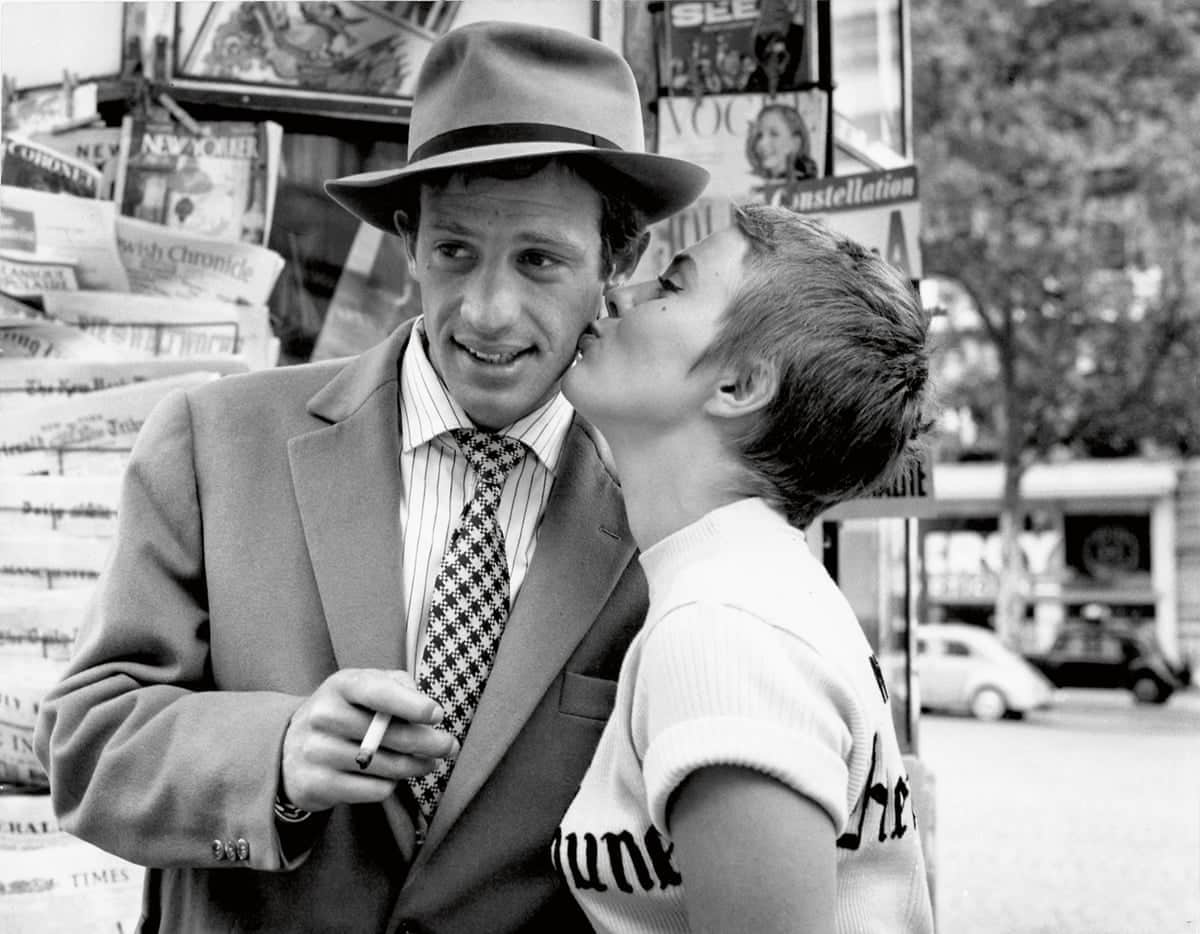
Jean-Paul Belmondo and Jean Seberg on the Champs-Élysées during the filming of À bout de souffle, 1959. DR
The Cinémathèque française and Frank Gehry’s Building
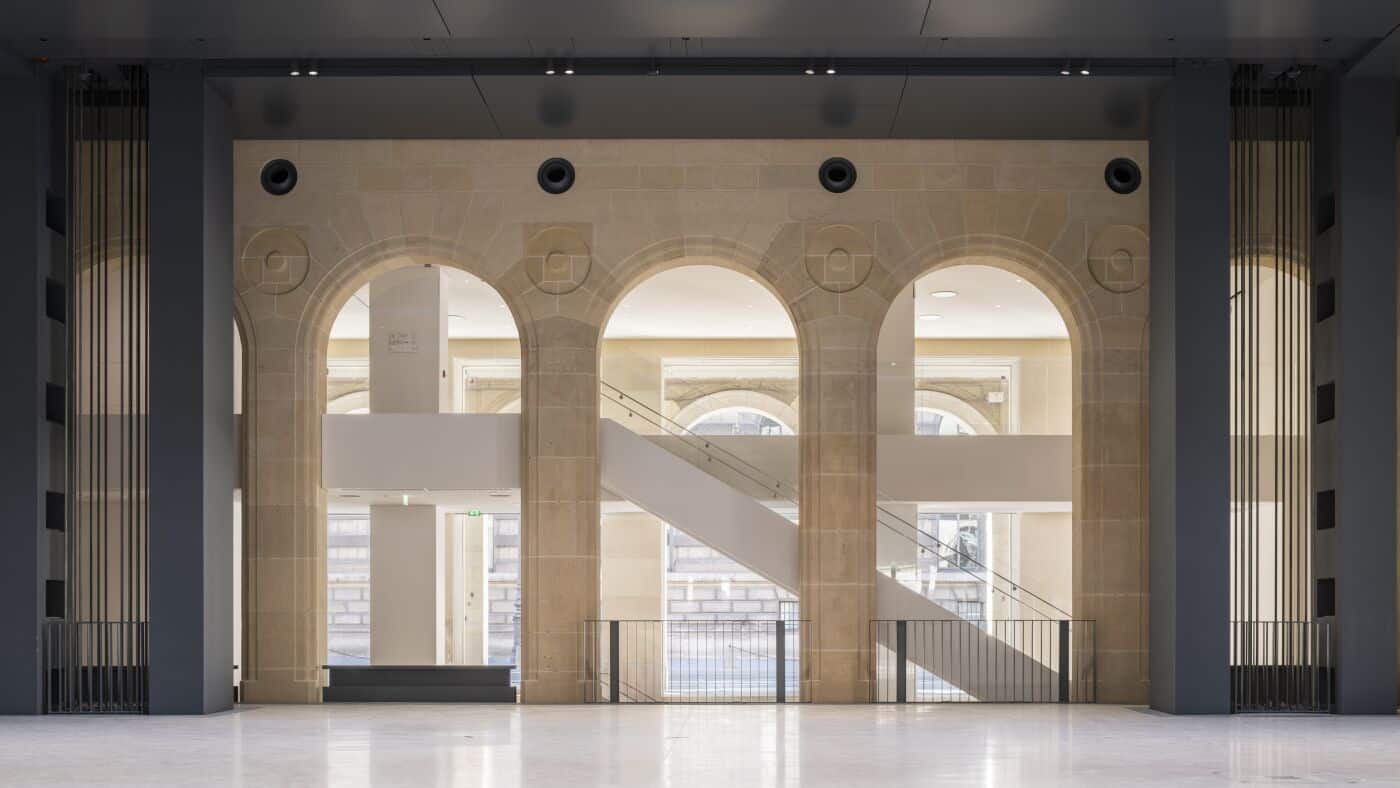
The cinematheque Francaise draws visitors for its exhibitions, retrospectives and permanent collections of cinema history but the building itself, on Rue de Bercy deserves attention too.
The Cinémathèque, co-founded by Henri Langlois, a passionate film historian and archivist, was created not just to preserve rare and early films, but to ensure they were seen at screenings and accessible to the public. Amongst these are many of the early films of the leading directors who formed the Nouvelle Vague.
Before moving to rue de Bercy, the Cinémathèque was housed in several locations, including the Palais de Chaillot, built for the 1937 Exposition Universelle. Today, it occupies the former American Center, designed by Frank Gehry and opened in 1994. After the American institution closed, the building remained vacant for several years before being transformed to house the Cinémathèque.
Still little known among Parisians, significant projects in Paris, showcasing the emergence of his signature style.
Its irregular volumes, walkways and glass-and-metal façades anticipate forms he would later develop for the Fondation Louis Vuitton. It is unlike a conventional museum with an architecture to match.
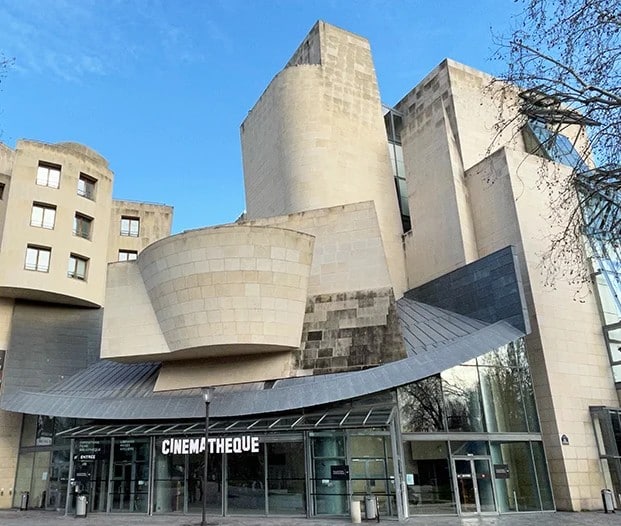
Cinémathèque Française — DR.
The Major Studios Around Paris
As the film industry expanded at the beginning of the twentieth century, studios were built to provide sound stages, sets and production facilities. The areas of Joinville, Boulogne and Saint-Maurice played an important part in the development of French cinema.
The Boulogne studios are still in use, although today mainly for television production. The Joinville studios gradually declined with production moving to Bry-sur-Marne over 15km from central Paris.
Saint-Maurice ceased production in the 1970s when 5 sound stages were destroyed by fire.
However, cinema lives on in Paris. The successful filmaker Luc Besson (Nikita, The Big Blue) launched the Cité du Cinéma in a former power station north of Paris. The project was conceived as a French counterpart to Cinecitta in Italy or Pinewood, just outside London.
The site has nine modern sound stages and also houses the Louis Lumière school, which has trained generations of cinema professionals. France’s film industry is supported by specialised schools and colleges and a long-standing commitment to access through public funding and state support. French films currently account for around 40% of tickets sold in France.
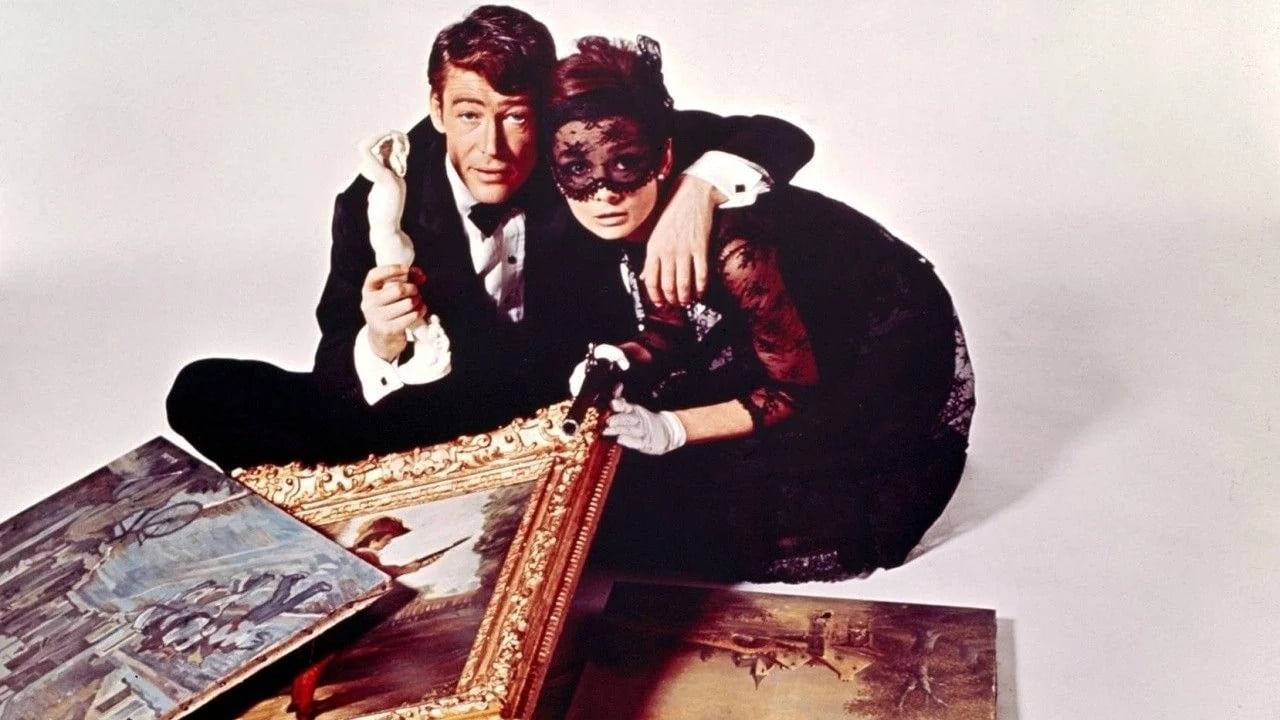
Audrey Hepburn and Peter O’Toole at the Boulogne studios during the making of How to Steal a Million, Paris, 1965. Credit: Douglas Kirkland.
The Nouvelle Vague and the Real Paris
The Nouvelle Vague emerged as a force for change in the late 1950s.
Several of its leading directors had worked as critics for Cahiers du Cinéma, the influential film magazine. The streets of Paris became part of the films themselves. Working with smaller crews, these directors filmed cafés, cars, apartments and everyday life, often without permits or permission, with Paris herself at the heart of the action and movement.
In À bout de souffle (Breathless), Belmondo and Jean Seberg move through a Paris recognisable today.
The rue Campagne-Première, where the hero tragically dies at the close of the film still exists today.
The film uses the ordinary day-to-day life of the neighbourhood as a backdrop to the story, instantly recognisable as a Paris we all feel we know.
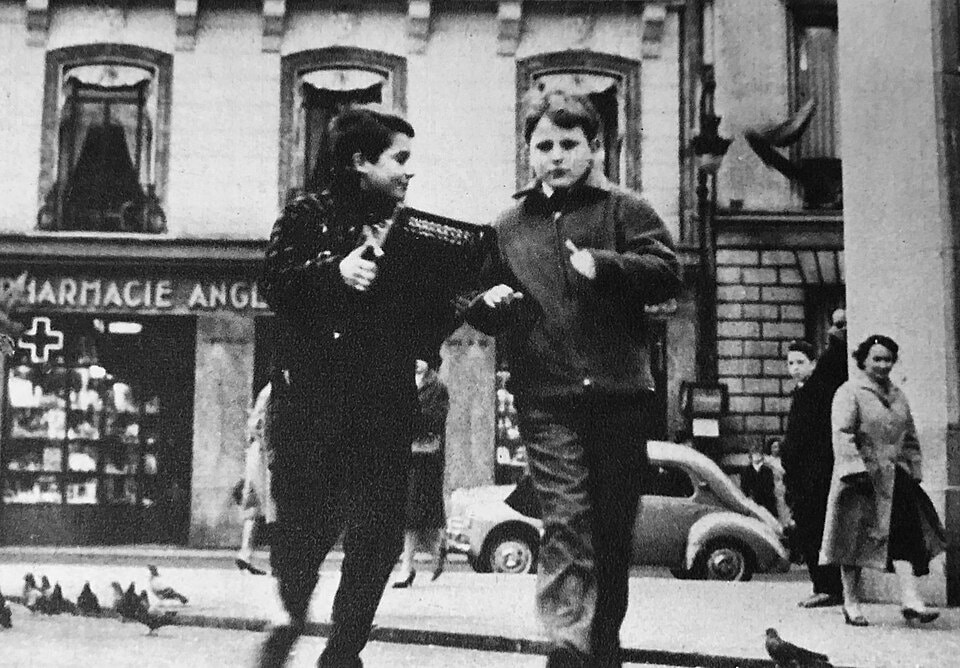
Jean-Pierre Léaud as Antoine Doinel and Patrick Auffay as René Bigey in The 400 Blows (Les Quatre Cents Coups), François Truffaut, 1959. DR
Studio Jenner, Jean-Pierre Melville and Le Samouraï
At 25 bis rue Jenner, in the south of Paris, Jean-Pierre Melville, the great directore had set up his own studio. He used it as his headquarters and a base for his production office as well as a filming location.
Jean-Pierre Melville was an admirer and a true connoisseur of American film noir. He shot Le Samouraï at the studio, with Alain Delon in the iconic role of Jef Costello.
However, tragically during the production of Le Samouraï, a fire destroyed the studios. The building was lost, but its history lives on as a backdrop to the film’s story.
The film reflects Melville’s signature style: a solitary man, austere interiors and a portrayal of Paris that reflects the post war period in which it was made.
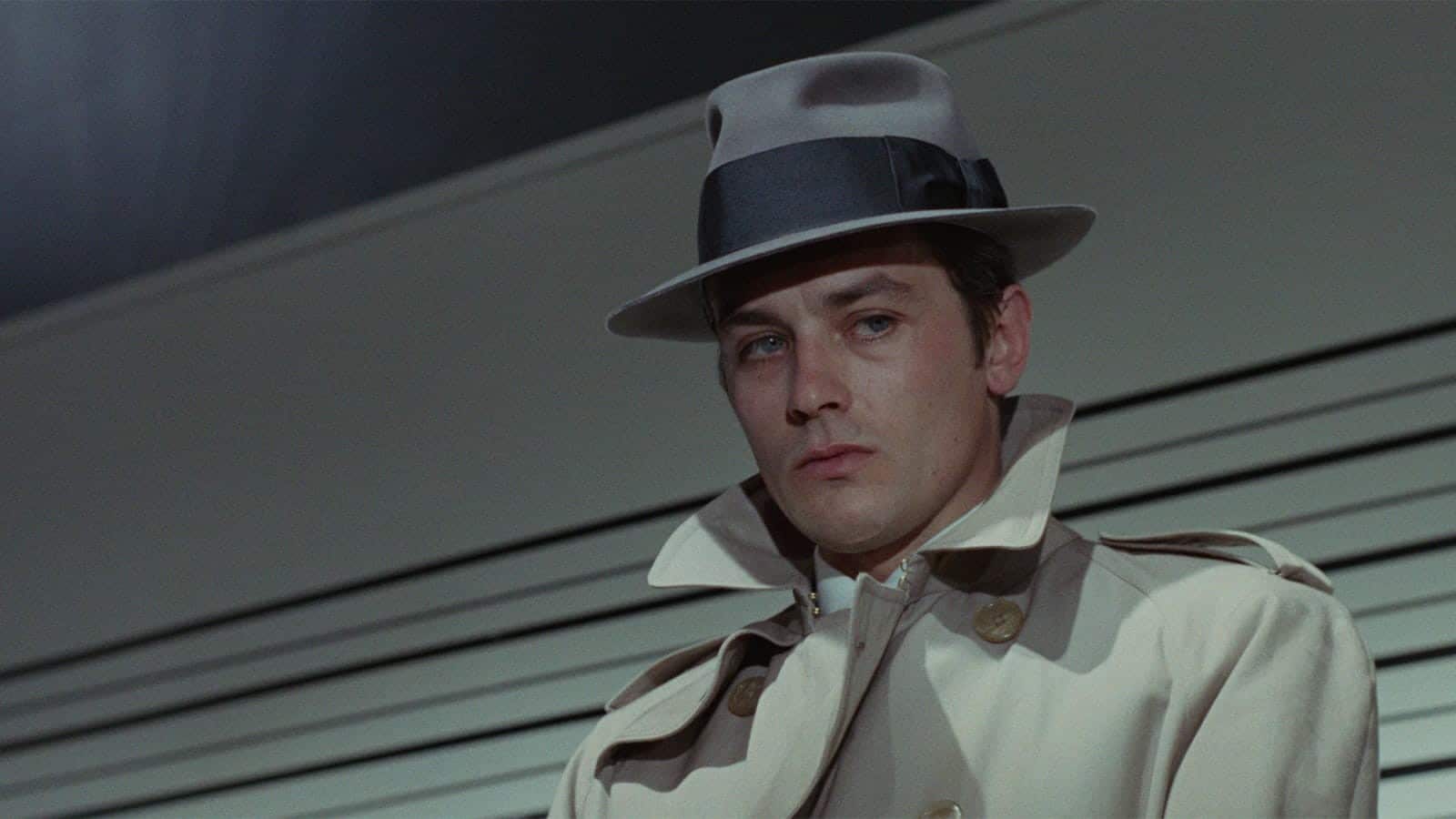
Alain Delon as Jef Costello in Le Samouraï. Still: Janus Films / Criterion Collection. DR
Paris, City of Cinema
Some of of the places and buildings immortalised in film still stand, others have disappeared, but the films keep their memory alive.
Paris can be discovered and visited through the film lovers eye.
A Re-Situ itinerary can bring these locations and the stories to life alongside the locations of more recent wonderful French films.
Discover and explore Paris through tailor-made tours and itineraries.