
Andy Warhol: Line and Image
Discover Warhol’s visual language before the emergence of his iconic images.
FROM 16 SEPTEMBER 2026 · MUSÉE DU LUXEMBOURG
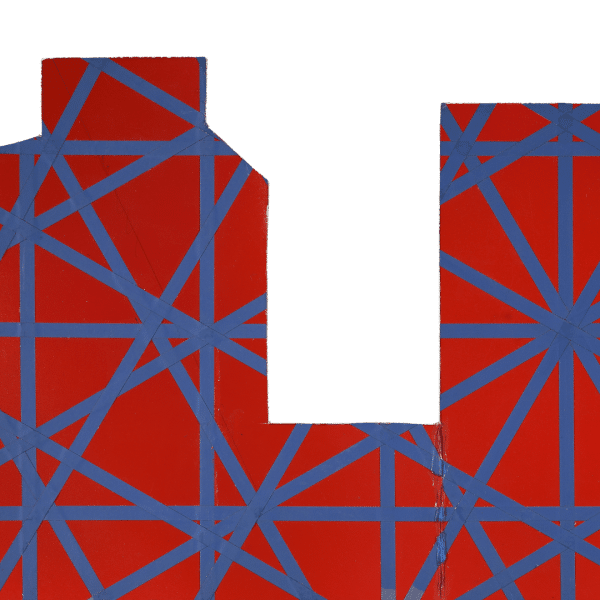
From the 16 September, the Musée du Luxembourg is delighted to host an exhibition devoted to Andy Warhol’s draughtsmanship and line drawing skill within in his early work.
Drawings, paintings, screenprints and photographs show how his images evolved and took shape.
Long before his screenprints of stars and consumer products, Warhol was already overlaying, repetition and duplication in drawings and lithographs. This exhibition focusses on his early formative years where he was developing his distinctive visual style: precise lines, sharp contours and images borrowed from popular culture.
A rare opportunity to see the emergence of a global art superstar.
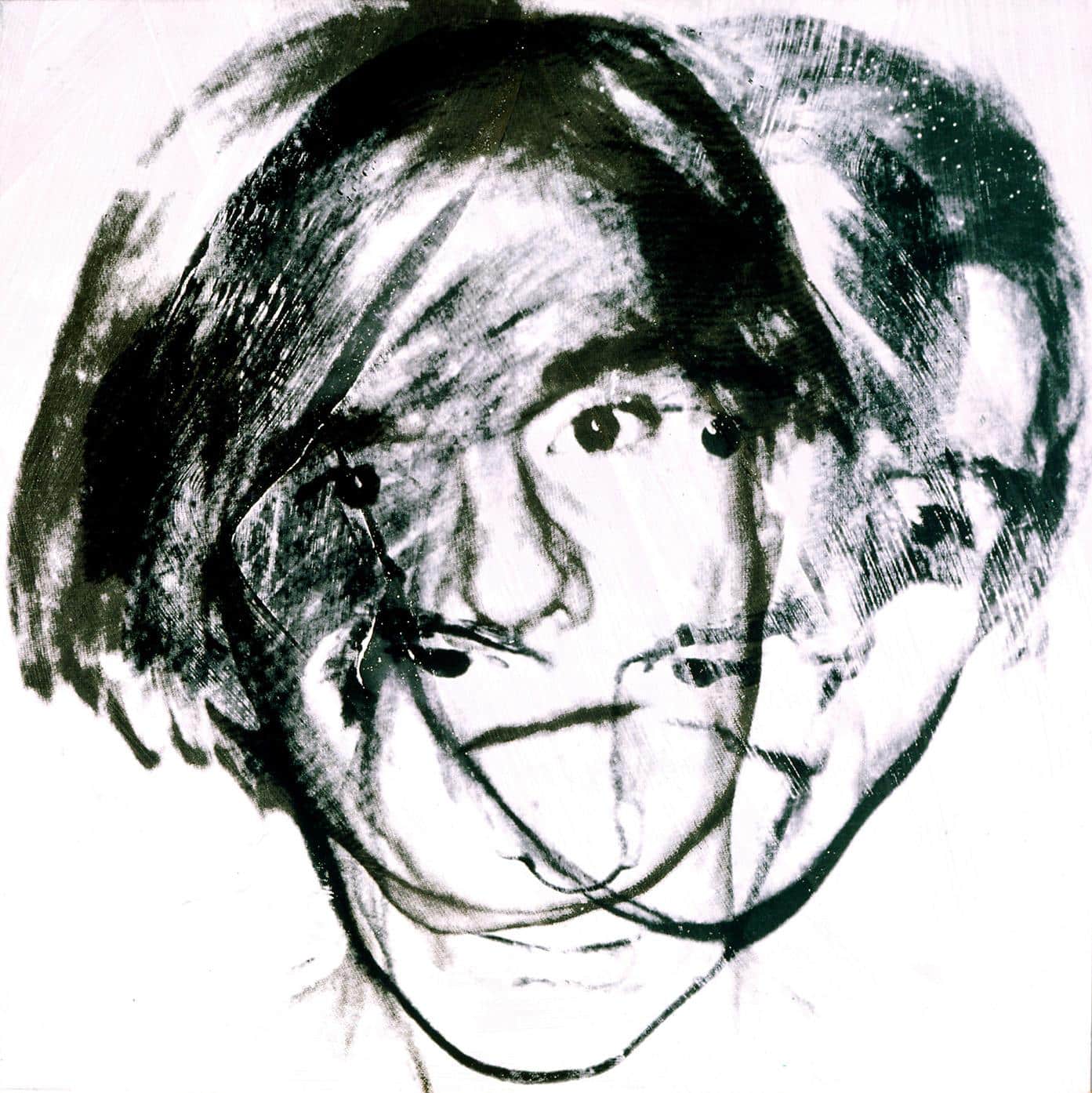
The Andy Warhol Museum, Pittsburgh. © The Andy Warhol Foundation for the Visual Arts, Inc. / ADAGP, Paris 2026.
Simone Fattal: Cities at the Bottom of a Lake
Landscapes, stories and myths rising to the surface.
18 SEPTEMBER 2026 – 24 JANUARY 2027 · MUSÉE D’ART MODERNE DE PARIS
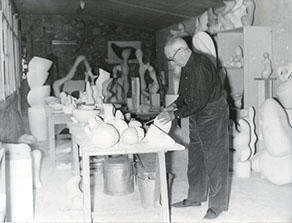
From 18 September 2026 to 24 January 2027, the Musée d’Art Moderne de Paris is showcasing a first solo exhibition devoted to Simone Fattal, the Lebanese-American artist born in Damascus now resident in Paris for many years.
Bringing together around a hundred works made over over the course of more than fifty years, the exhibition moves effortlessly paintings, ceramics and collages. The artworks evoke buried cities, vanished landscapes and the stories and myths that always rise to the surface. An exhibition that encourages the viewer to explore and move between architecture and place, memory and mythology.
![Simone Fattal, Centaur [Centaure], 1999](https://bespoke.paris/wp-content/uploads/2026/09/simone-fattal-centaur.jpg "simone-fattal-centaur")
Courtesy of the artist and Karma International. Photo: François Doury © ADAGP, Paris 2026
Gustave Fayet: Collecting, Creating, Decorating
A unique collection of key avant-garde pieces.
9 OCTOBER 2026 – 8 MARCH 2027 · FONDATION LOUIS VUITTON
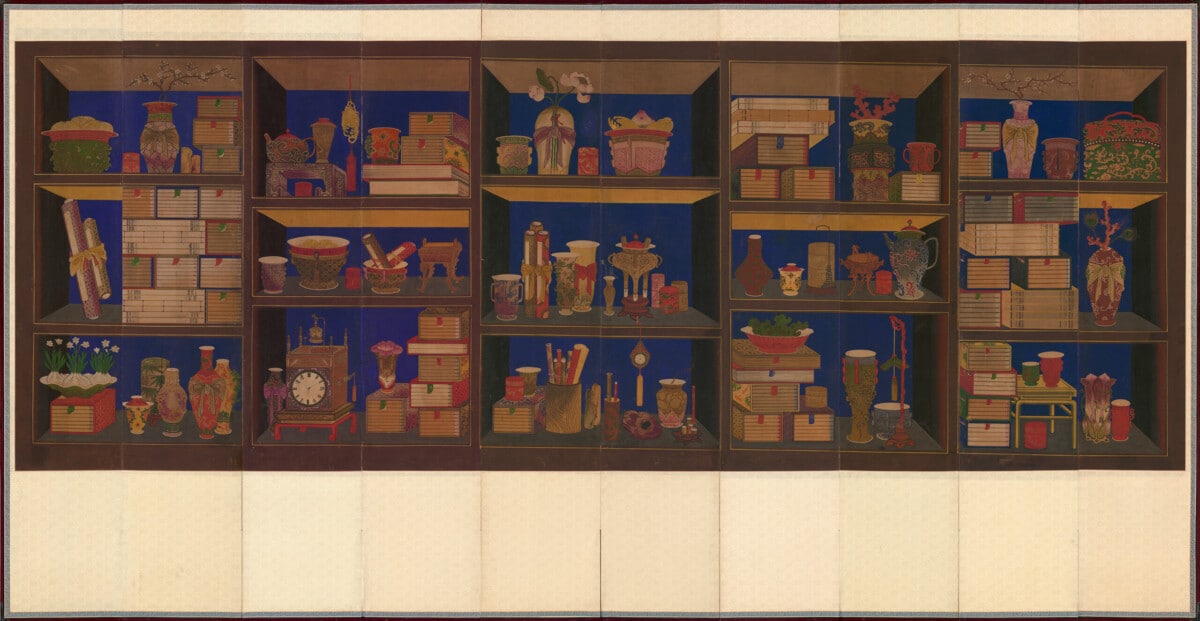
Born into a family of entrepreneurs in southern France and introduced to art by his father and uncle, Gustave Fayet began collecting in earnest after inheriting the family fortune in 1899, not simply to acquire works, but to support the artists and avant-garde ideas he believed in.
Fayet assembled more than 740 major works of modern art, including works by Van Gogh, Gauguin and Redon. Later in life, he also designed tapestries, textiles, interiors and decorative objects. The exhibition places masterpieces from his collection alongside his own creations, showing how his love of the avant garde connects with his own personal world.
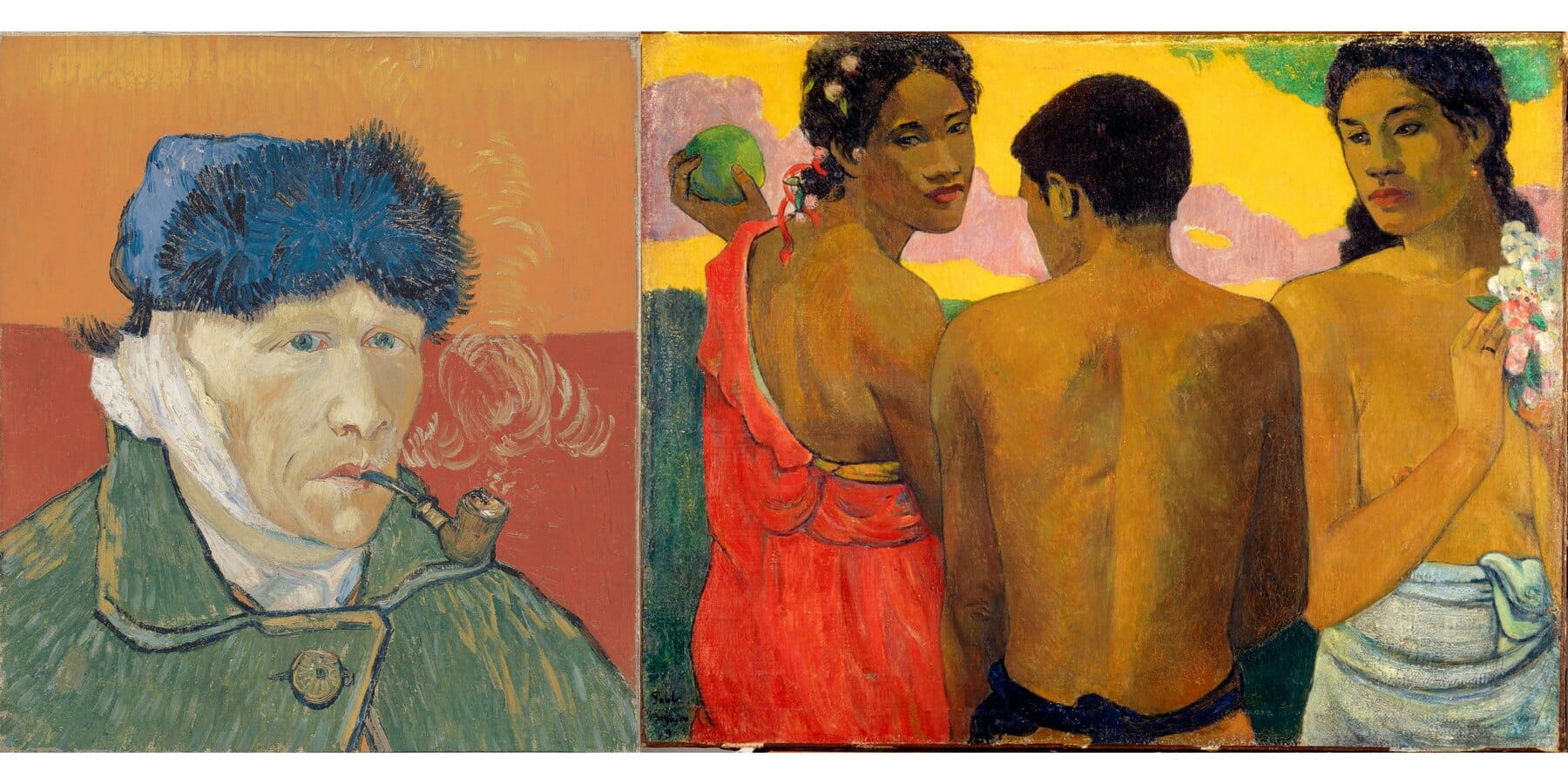
Credit: Guimet Museum / National Museum of Korea.
UNESCO headquarters in Paris, a building rarely open to the public
Tale a tour through architecture and art in a landmark building in the heart of Paris.
The UNESCO headquarters is one of those Paris buildings you pass by without every really knowing what’s hidden inside. Founded in 1945, the Organisation moved to Paris in 1946. Its permanent home on Place de Fontenoy, in the 7th arrondisement and was inaugurated in 1958. Its been its home ever since.
This monumental setting, at the heart of institutional Paris was an ambitious choice. The building stands out and holds its own despite being surrounded by the landmarks of the well known Trocadéro – Eiffel Tower and École Militaire.
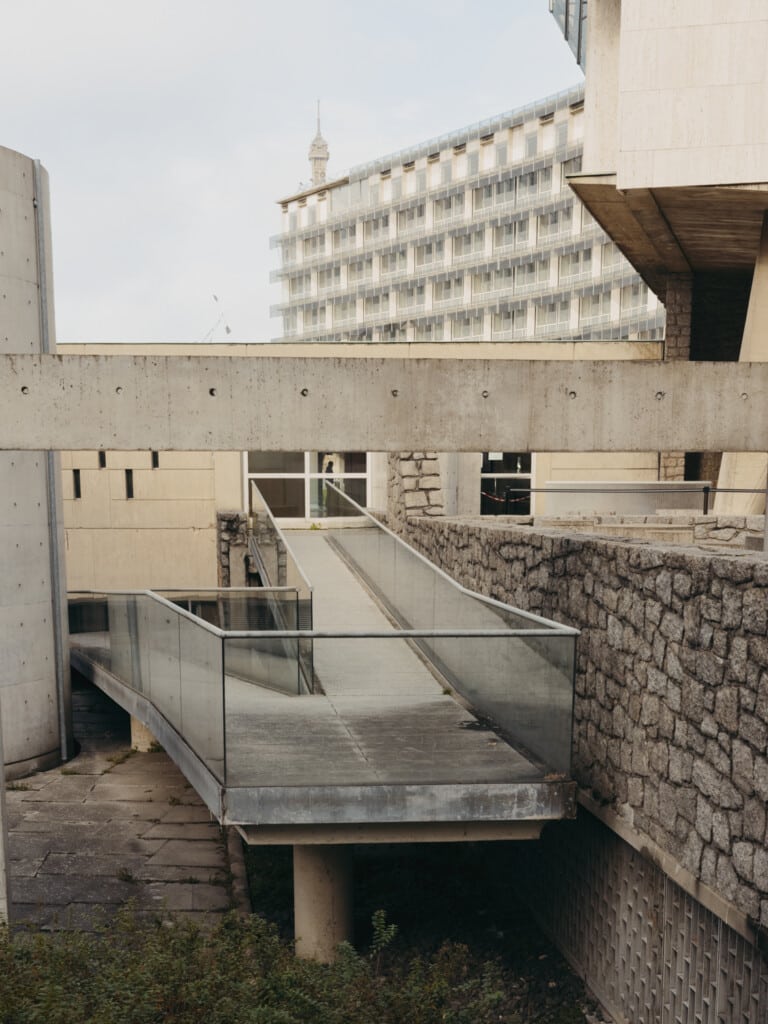
Photo: Clémentine Belhomme
An international modernism in the 7th arrondissement
The project brought together Marcel Breuer, Bernard Zehrfuss and Pier Luigi Nervi together around a shared ambition to give distinctive visual form to an new international institution. Their design was selected by a panel of judges including such legends as Lucio Costa, Walter Gropius and Le Corbusier.
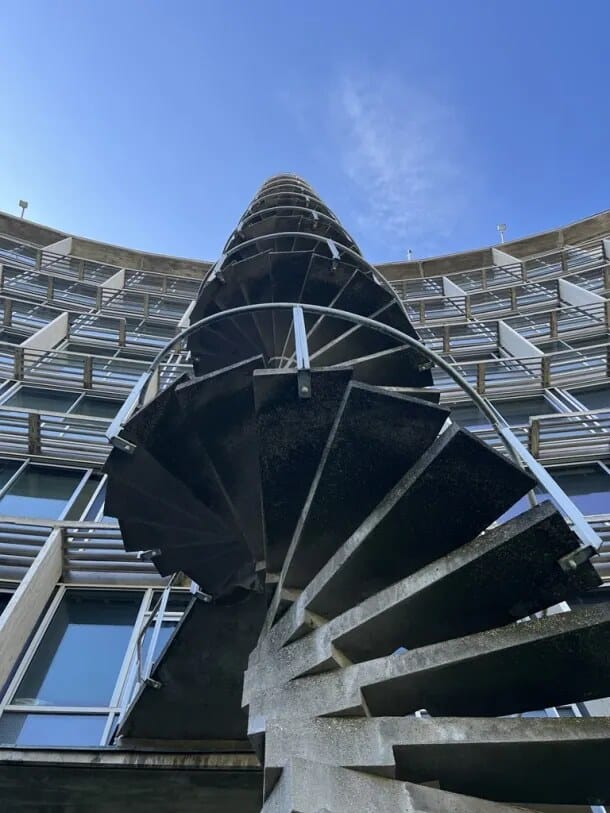
The main Y-shaped building was designed by Marcel Breuer and Bernard Zehrfuss and is the signature shape of the institution, known as the ‘three-pointed star’.
It rises five metres above the ground on 72 concrete pillars that lift and hold the upper floors above the ground, open up the ground levels and enable and frame the circulation routes beneath the offices.
In addition, the conference building, known as ‘the accordian’ as its concrete walls and roof form a folded concrete shell, enables the main hall to be open and unobstructed.
© UNESCO / Fiona Medina.
An art collection, alongside intangible heritage
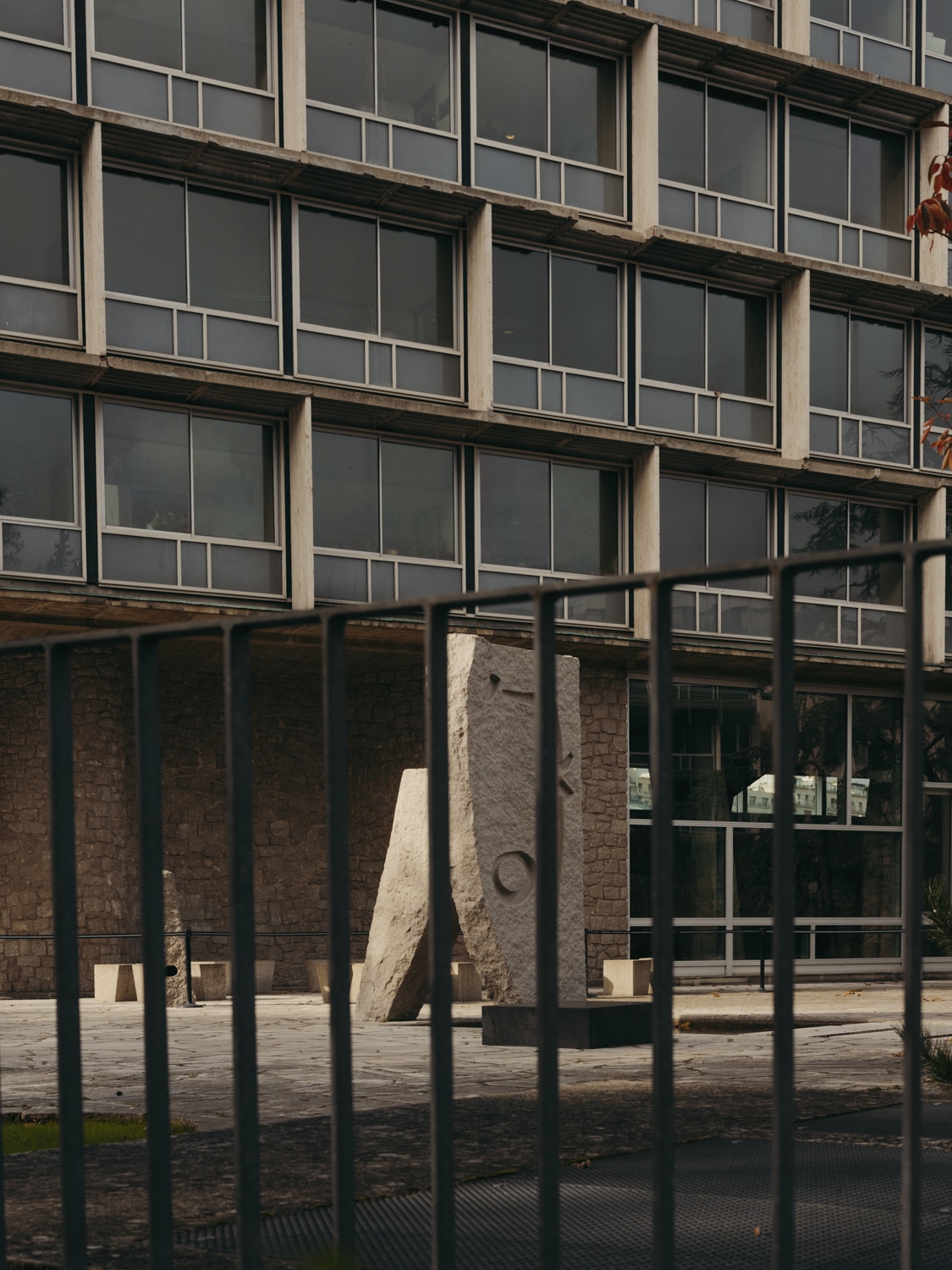
UNESCO plays an important global role protecting heritage, customs, knowledge, skills, language and traditions. Its art collection reflects this commitment. Around 1800 objects by more than 360 artists assembled through commissions, acquisitions and generous gifts.
Picasso, Miró, Jean Arp, Calder, Giacometti and Noguchi are just a few of the celebrated names that appear alongside artists lesser known in a wonderful institutions collection.
The collection grow: Erik Reitzel’s Symbolic Globe set up in 1995; Vhils mural SUBSTRATUM Scratching the Surface in 2023 and Michelangelo Pistoletto’s Love Difference joining the collection in 2025.
Credit: Clementine Belhomme
Noguchi’s garden and Ando’s pavilion
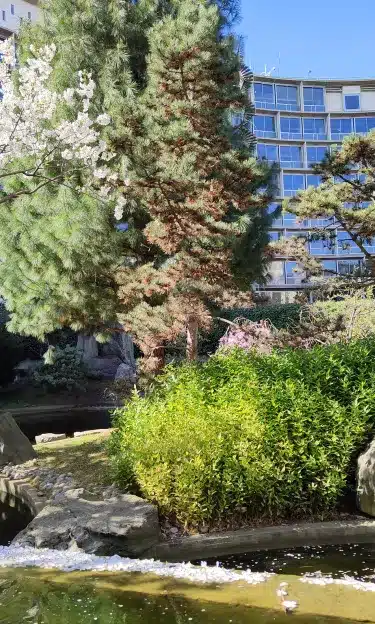
A furhter highlight of the building is Noguchi’s Japanese garden. Something to not simply look at but to move through and experience. Stone, water, plants and architecture come together alongside the meditation pavilion designed by Tadao Ando bringing light and a moment of mediation and calm to this wonderful building.
UNESCO / © Works of art collection, UNESCO / ADAGP Paris, 2025 / Isamu Noguchi