The Archipelago of Paris
When the Seine Shaped a Constellation of Islands
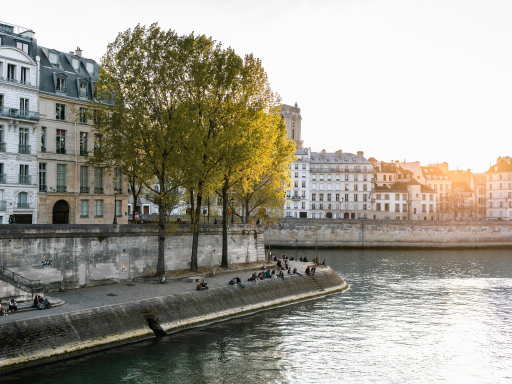
Long before stone embankments, Haussmannian alignments, and the orderly riverbanks we know today, the Seine drew a true archipelago.
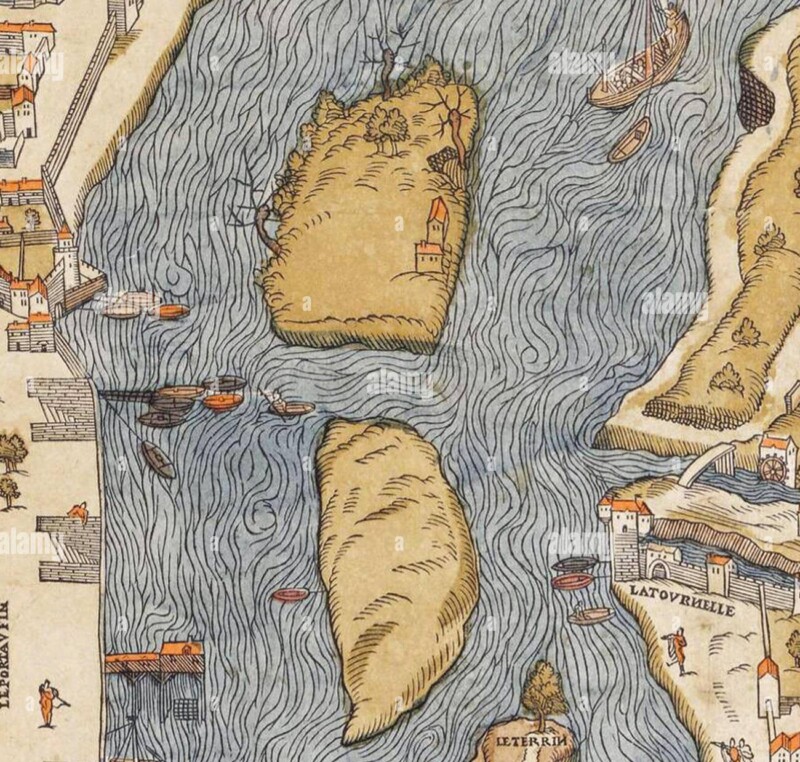
The river split into multiple branches, forming small islands that appeared, vanished, or shifted with the floods.
Some of these fragments of land survived; others were gradually absorbed into the expanding city.
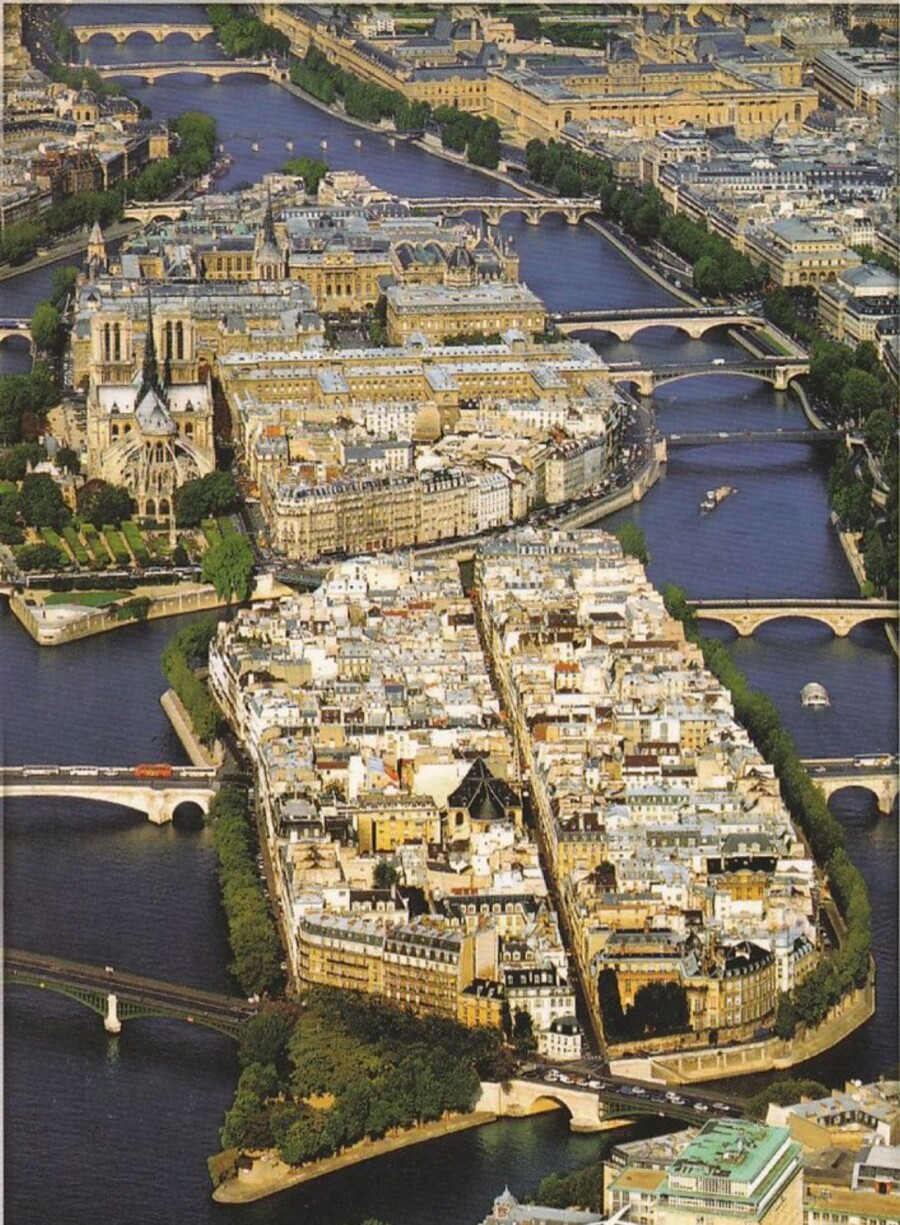
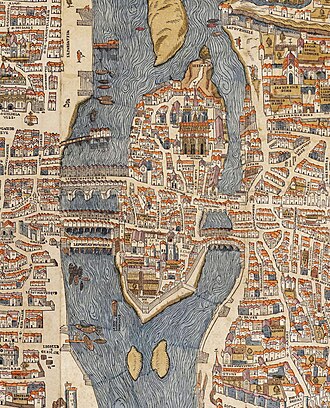
Today, only a handful of islands remain, yet each preserves a crucial chapter of Parisian history: the Île de la Cité, heart of ancient Lutetia; the Île Saint‑Louis, born from the fusion of two medieval islets; the Île aux Cygnes, an artificial strip hosting the Parisian Statue of Liberty since 1889 — reoriented toward New York in 1937; and farther downstream, the Île Seguin and Île Saint‑Germain, reminders of industrial Paris.
But the city once counted many more islands. Their memory reveals a vanished, utilitarian, ever‑shifting landscape shaped by the river.
The Lost Islands of Paris: An Forgotten Archipelago
These islands served highly practical purposes — sometimes unglamorous, but essential to the functioning of the city.
Here are the main ones, along with their historical roles:
- Île aux Vaches
Merged with Île Notre‑Dame to form today’s Île Saint‑Louis
Use: grazing land, wood storage, natural flood buffer.
- Île Notre‑Dame
Merged with Île aux Vaches
Use: gardens, wine warehouses, storage for construction materials.
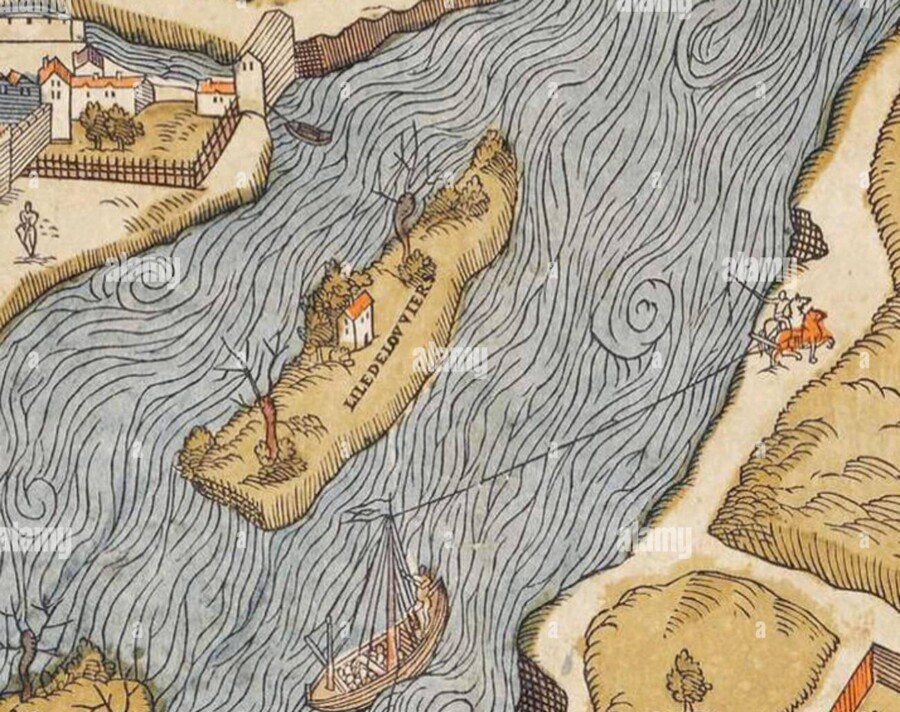
- Île Louviers
Attached to the Right Bank in the 19th century
Use: floating‑wood depot, logistical platform, occasional quarantine zone.
- The Former Île des Cygnes
Disappeared (not to be confused with the modern artificial island)
Use: material deposits, natural flood zone.
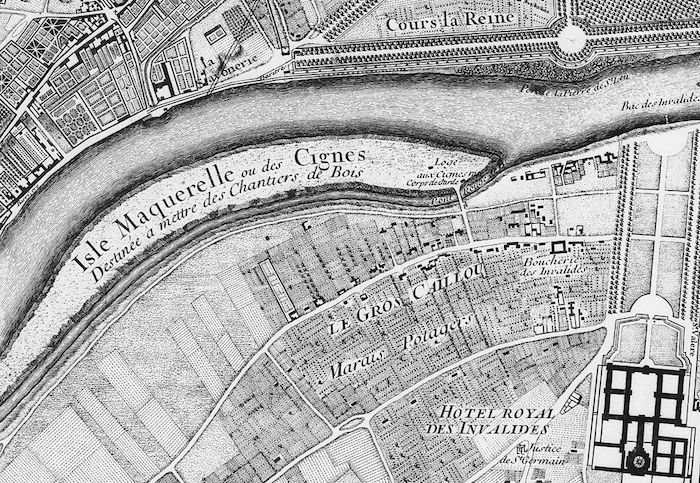
- Île Maquerelle (or Île Marguerite)
Absorbed in the 17th century
Use: grazing, rubble deposits, flood regulation.
- Île aux Treilles
Disappeared near today’s Quai de la Tournelle
Use: vineyards, small‑scale agriculture.
- Île de la Gourdaine
Disappeared near the Pont au Change
Use: watermills, craft activities powered by the river’s current.
- Île du Patriarche
Absorbed during the Middle Ages
Use: fishing, agriculture, occasional refuge during floods.
- Île des Javiaux
Disappeared near today’s Quai de Gesvres
Use: organic‑waste deposits, natural decantation, sanitary buffer.
From Wild River to Engineered Waterway
From the 17th century onward, Paris began to tame the Seine.
Quays were built, banks were straightened, and secondary channels were filled in.
The river became an efficient urban artery, serving commerce, circulation, and the city’s monumental transformation.
This gradual reshaping erased much of the ancient archipelago — but it also created the Paris we know today.
The Memory of the Islands: A Disappearing but Legible Paris
Although many of these islands have vanished physically, their memory endures in old maps, in street names, in the geometry of the quays, and in the subtle topography of the riverbanks.
They remind us that before becoming a city of stone, Paris was a city of water, molded by the shifting currents of the Seine — fluid, changing, almost amphibious.
A Paris that, beneath the surface, still exists.
If you want to read Paris through its hidden layers — its vanished islands, its reshaped riverbanks, its quiet reinventions — Bespoke Paris offers private tours in Paris designed to reveal the city as it truly is.