Visiting Notre-Dame : What the Restoration Has Actually Changed
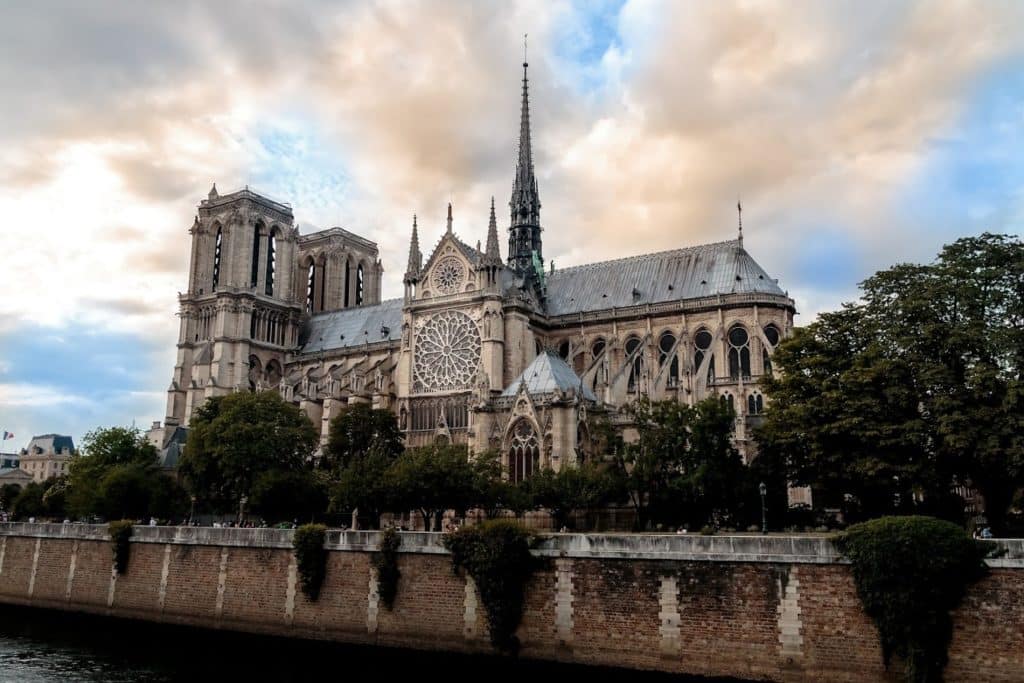
On the evening of April 15, 2019, a third of the world watched Notre-Dame burn. Five years later, on December 7, 2024, the cathedral reopened. Most of the coverage focused on the emotion of the moment, the crowds, the music, the symbolism of return.
Very little of it explained what you are actually looking at now when you walk through the door.
That is what this article is for.

The cathedral you see today is not the one that stood before the fire
This is the first thing to understand, and the most disorienting.
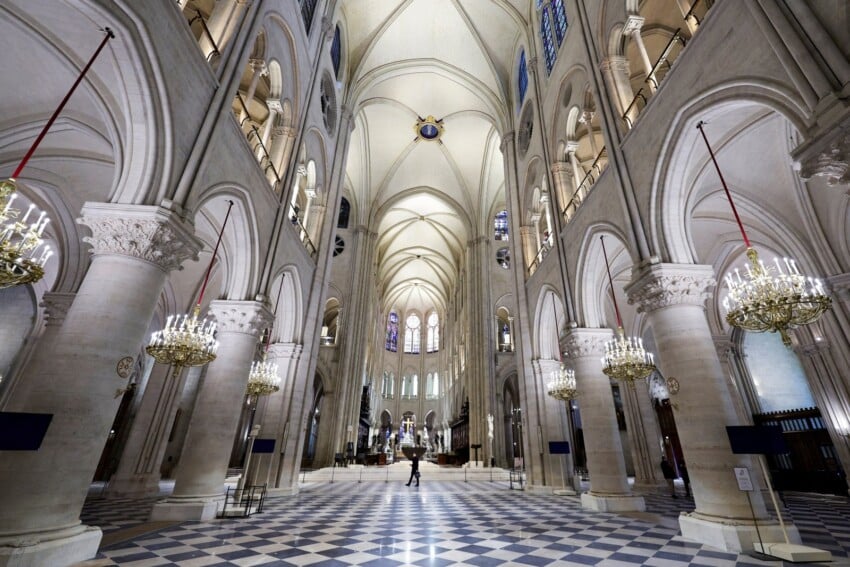
The Notre-Dame that generations of visitors entered was dark. Not atmospheric dark, obscured dark. Centuries of candle smoke, pollution, and accumulated grime had settled into the stone, the vaulting, the nave, turning what was built as an architecture of light into something considerably more sombre.
The fire stripped that away. The restoration cleaned everything else.
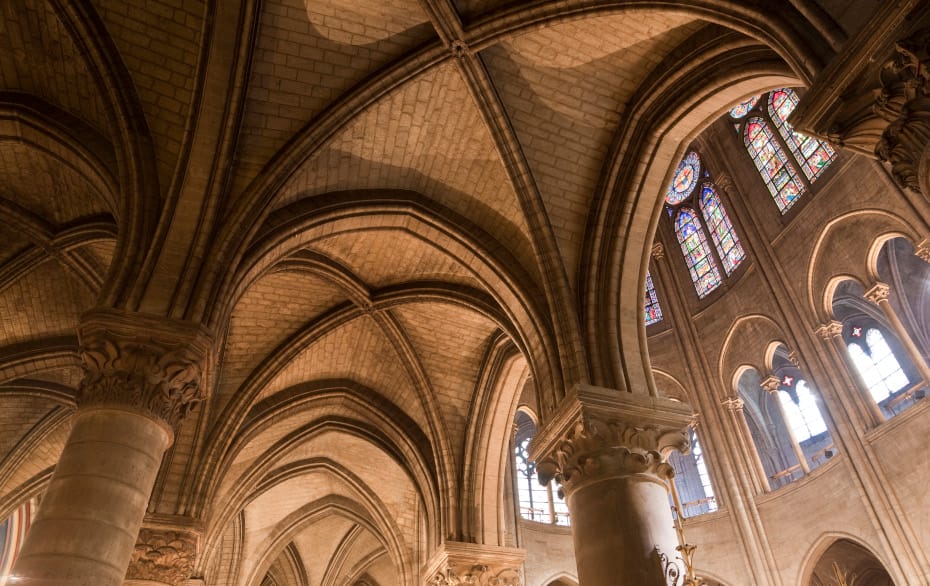
What you walk into today is closer to what the cathedral looked like in the 13th century than anything anyone alive had seen before. The stone is pale, almost luminous. The proportions read differently. The geometry of the Gothic vault, designed to direct the eye upward, to make the structure feel weightless — finally does what it was always intended to do.

What was rebuilt, and how

The spire

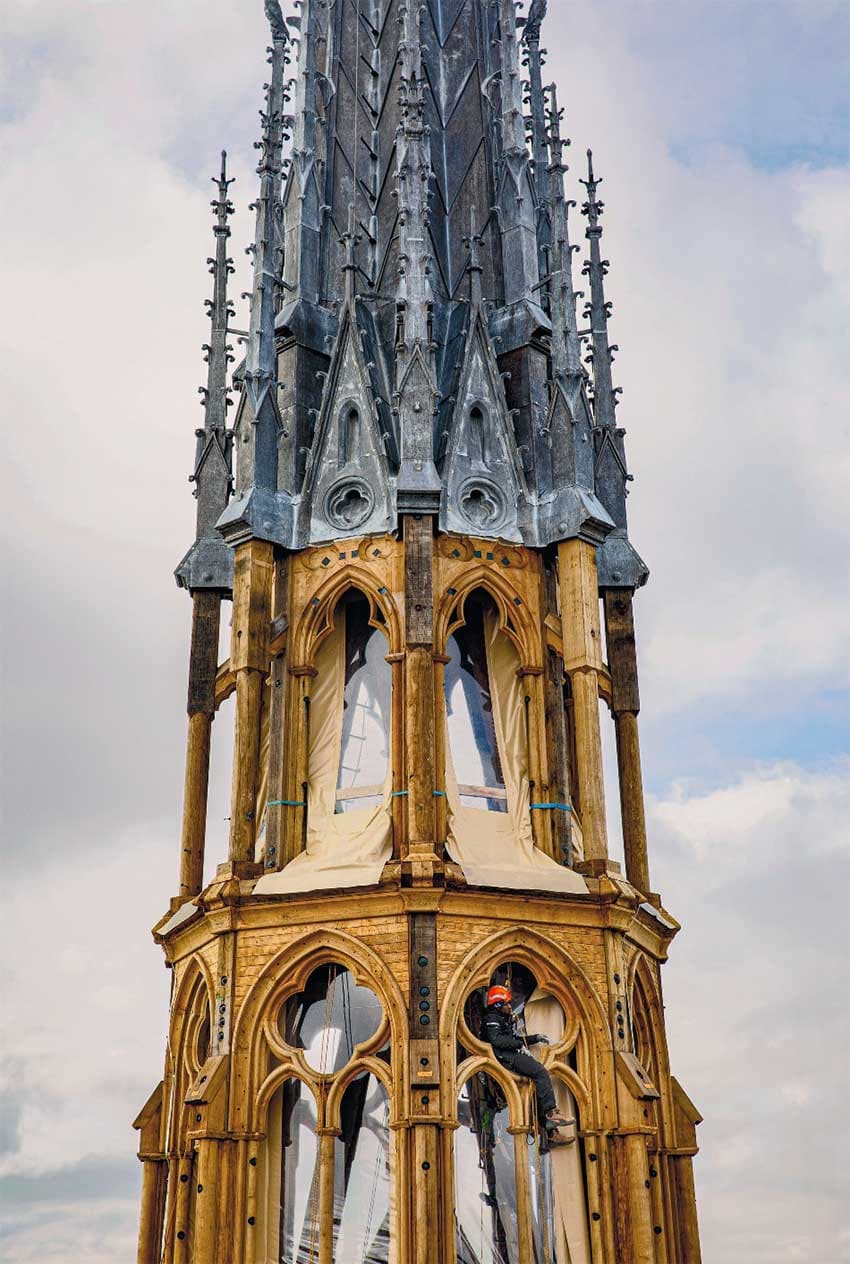
The original spire, designed by Viollet-le-Duc in the 19th century, collapsed in the fire. The rebuilt version is faithful to his design but constructed using modern techniques, a framework of new oak, covered in lead, rising to the same height and silhouette. From the outside, it looks as it did. From inside the restoration debate, it represented a choice: not to reinvent, but to restore.
The roof and framework

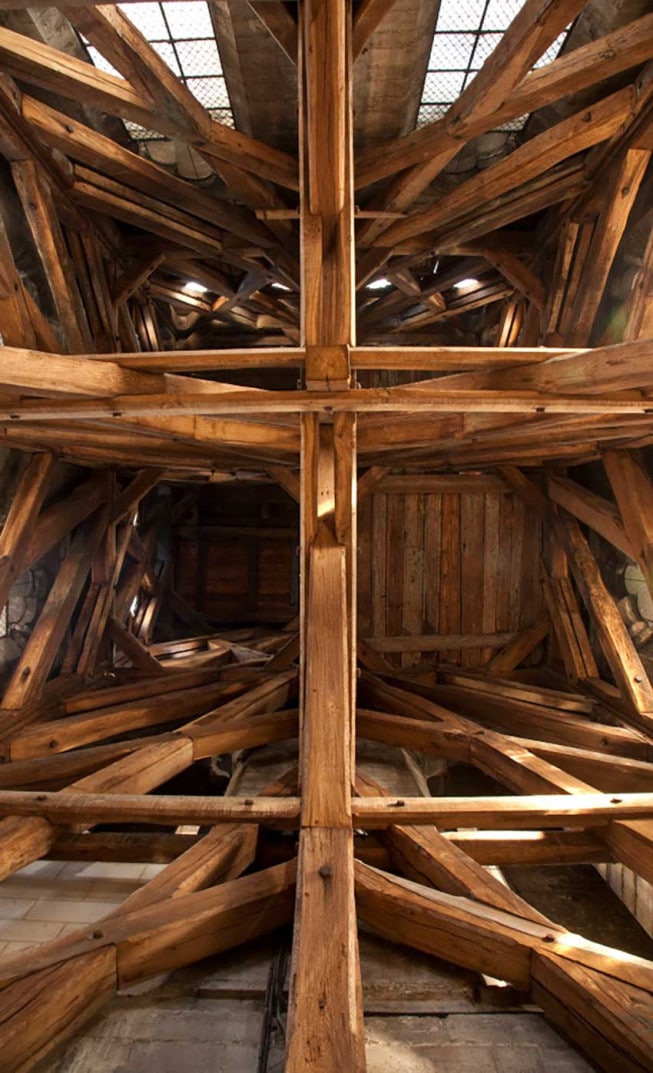
The medieval oak framework, la forêt, as it was called, the forest, for the density of its timber, burned almost entirely. It has been replaced with new oak, sourced from French forests, worked by hand by craftsmen using traditional methods. It will not be visible to visitors. But it is there.
The interior furnishings

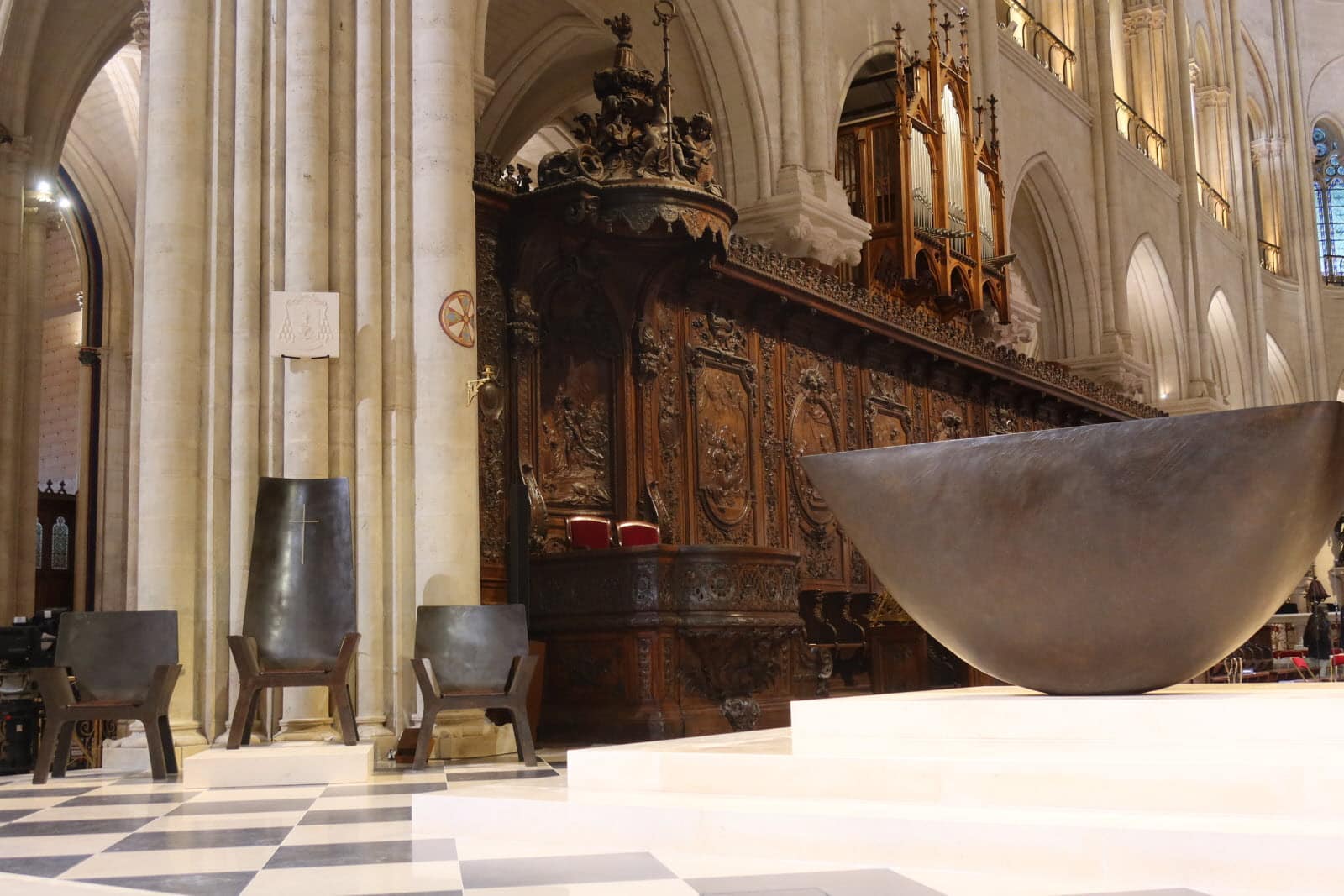
Here the restoration made its most visible contemporary statement. The new liturgical furnishings, altar, ambo, baptismal font, bishop’s chair, were designed by Guillaume Bardet, a French designer chosen through international competition. They are unambiguously contemporary : clean lines, bronze and stone, making no attempt to imitate the medieval. Whether you find this jarring or honest depends on how you understand the relationship between a living building and its history.
What the restoration revealed
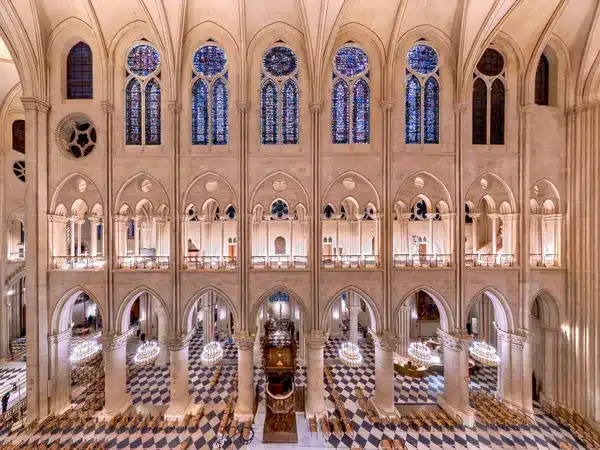
The cleaning of the interior uncovered something unexpected  : colour. Traces of the original medieval polychrome, the painted decoration that covered the walls and columns of Gothic cathedrals, were found beneath the grime. Notre-Dame, like most cathedrals of its period, was never intended to be monochrome. It was vivid.
The restored interior acknowledges this. The cleaned stone reads in gradations of warm grey and cream. The stained glass, meticulously cleaned, throws colour into the nave in a way that transforms the experience of standing inside.

How to visit Notre-Dame now

Come early, the cathedral opens at 8am, and the first hour belongs to those who understand what they are looking at. The crowds arrive after 10am and the experience changes entirely.
Stand in the nave and look up at the vaulting before you look at anything else. That is what the architects designed first, and it remains the most extraordinary thing in the building.
If you want to understand what you are seeing, the choices made in the restoration, the layers of history embedded in every surface, and what was saved, what was remade, and what was deliberately left as scar — that is precisely the kind of conversation a private tour of Paris is built for.
No two mornings are the same.