
Renzo Piano & Richard Rogers: Beaubourg, the Cultural Machine
In a deeply conservative France, and under the impulse of President Georges Pompidou, a passionate supporter of contemporary art, as was his wife Claude, the decision was made to entrust the project to two young, unknown architects: Italian Renzo Piano and British Richard Rogers.
Beaubourg remains a highlight of our architectural tours exploring contemporary Paris.
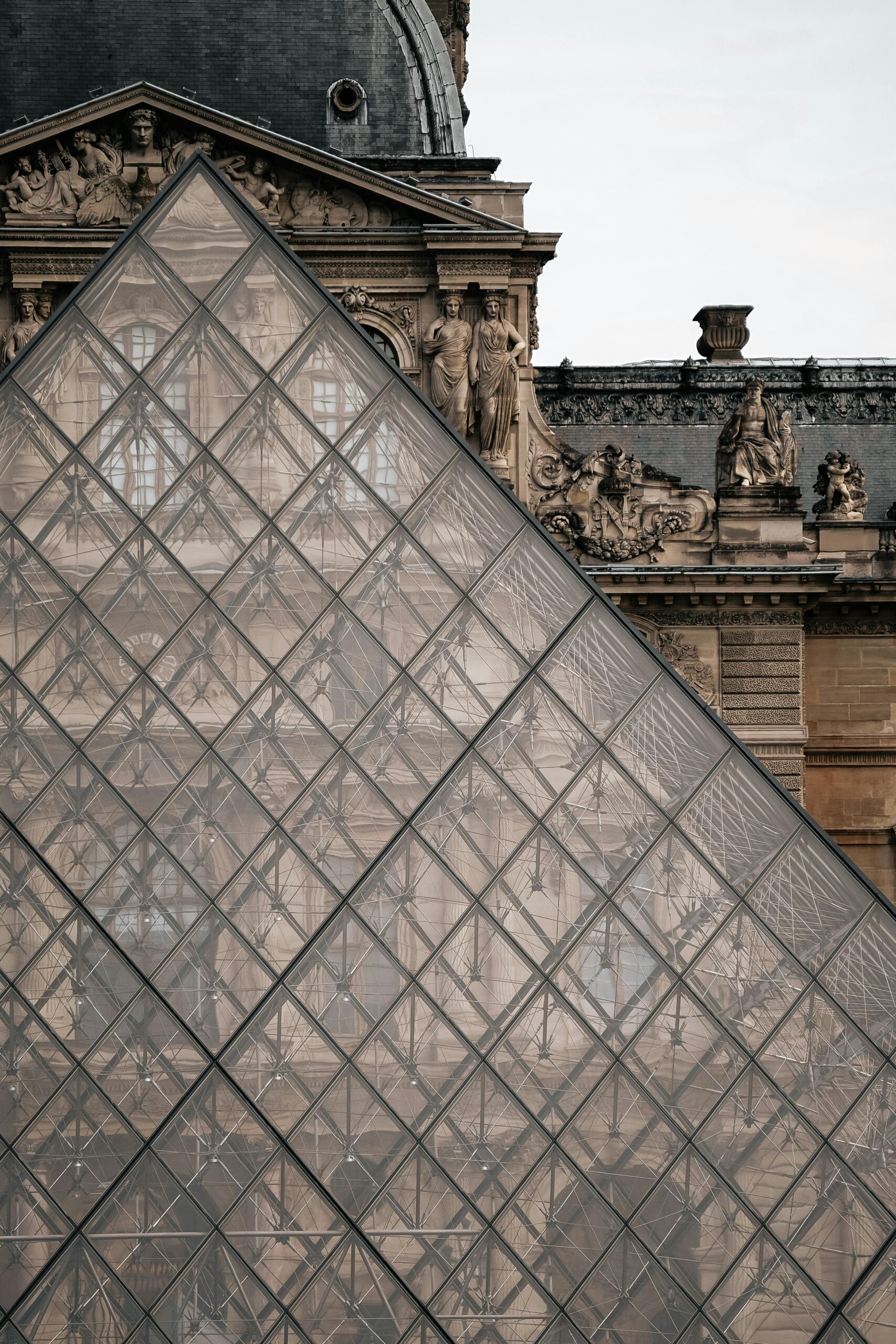
Their proposal was a manifesto: a steel skeleton, a colorful machine-building.
Where museums traditionally hide their structure and technical systems, here everything is exposed and celebrated. Circulation elements (escalators and staircases) run along the exterior. Technical networks, ventilation, water circuits, electricity, are fully visible. A color code even highlights them: blue for air, green for fluids, yellow for electricity, and red for circulation and dynamic elements.
Notably, the ever‑modern Jean Prouvé was part of the international jury that selected the Rogers & Piano proposal.
The building opened in 1977, in the heart of Les Halles, shortly after the food market had moved to Rungis. After fifty years of loyal service and hundreds of millions of visitors, the Centre Pompidou is now closed for a five‑year renovation, partly to meet ecological transition goals.
Since then, Rogers and Piano have multiplied major projects around the world. Renzo Piano, after completing the new Paris Courthouse, has also presented his vision for the renovation of the Montparnasse district.

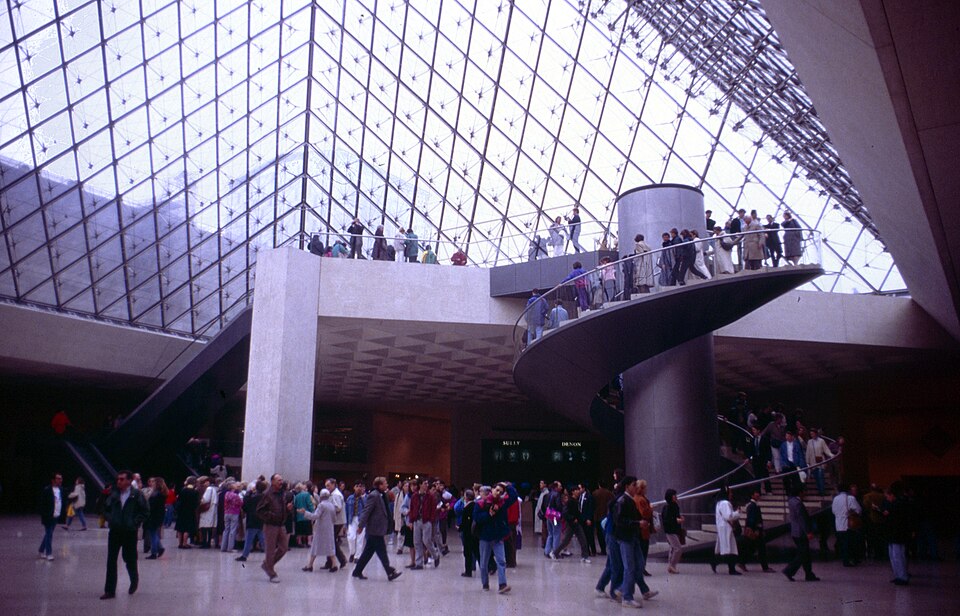
Ieoh Ming Pei: The Pyramid That Transformed the Louvre
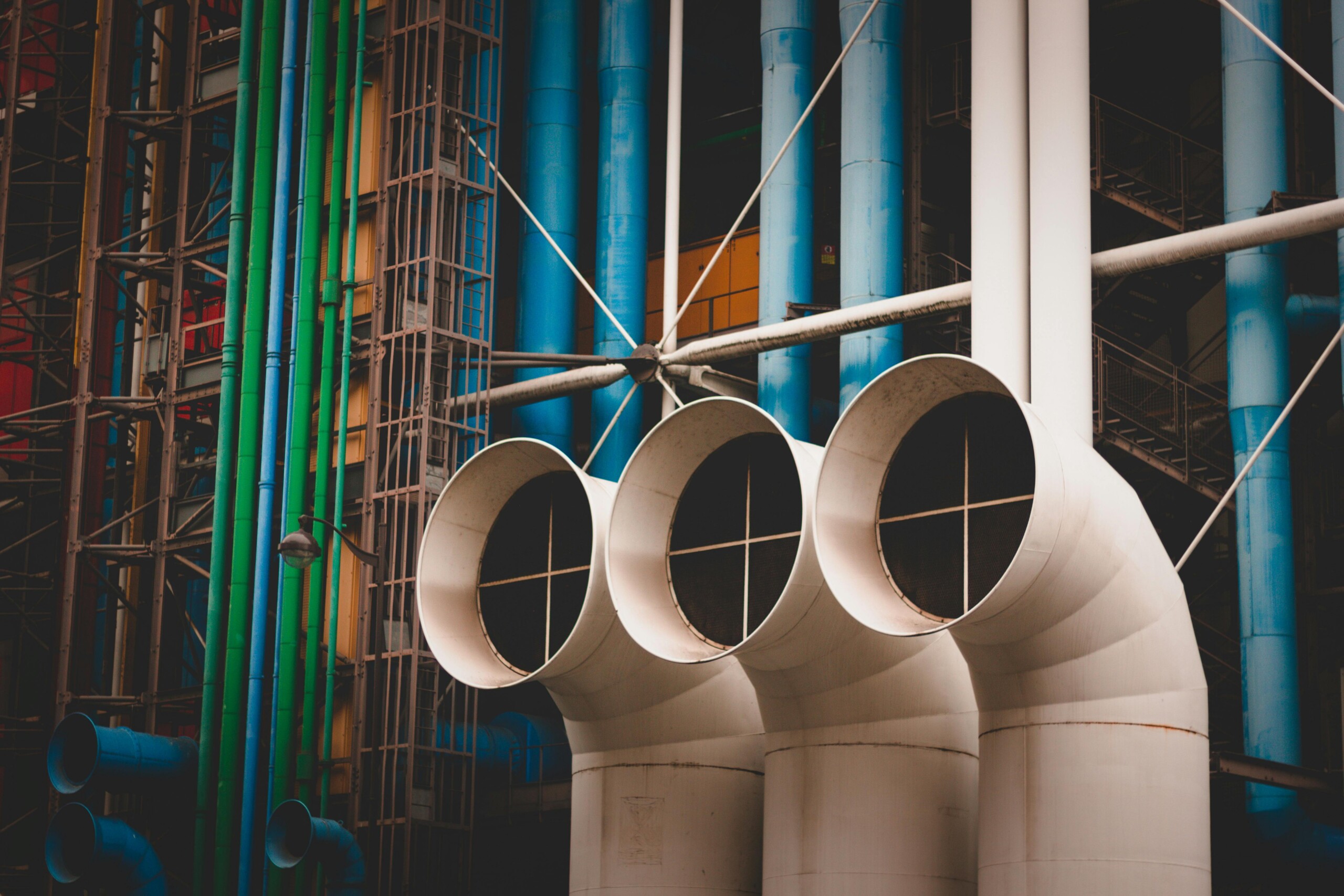
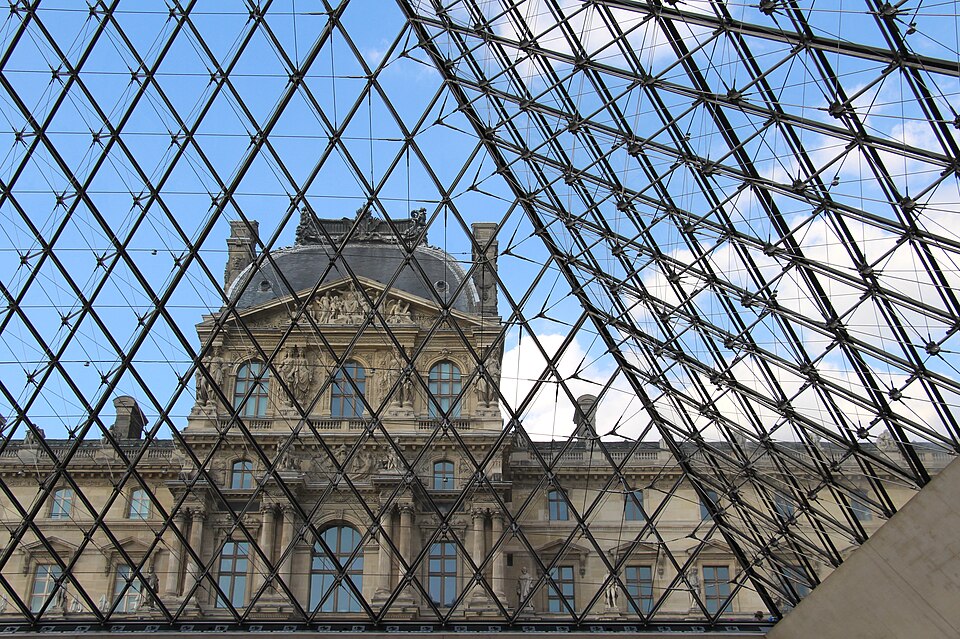
The Louvre Pyramid has become one of the most instantly recognizable symbols of Paris.
And yet, it was one of the most fiercely criticized projects in the city’s contemporary history.
By the late 1980s, the museum suffered from outdated infrastructure, insufficient visitor capacity, and a lack of space to display its vast collections. Part of the Louvre was still occupied by the Ministry of Finance.
Transforming the Louvre into a true national museum required, among other things, rethinking its main entrance.
This was not a traditional open competition. President François Mitterrand personally invited Sino‑American architect Ieoh Ming Pei. Pei accepted on the condition that he could work with complete independence. He conceived and proposed a glass pyramid, a bridge between past and future, a modern and technically complex structure set within centuries‑old stone, and an obvious reference to the museum’s Egyptian collections.
Inaugurated in 1989, the bicentennial of the French Revolution, the pyramid quickly established itself as a Parisian icon, on par with the great 19th‑century monuments. Twelve years after Beaubourg, it signalled the beginning of a new era of major architectural interventions in Paris.
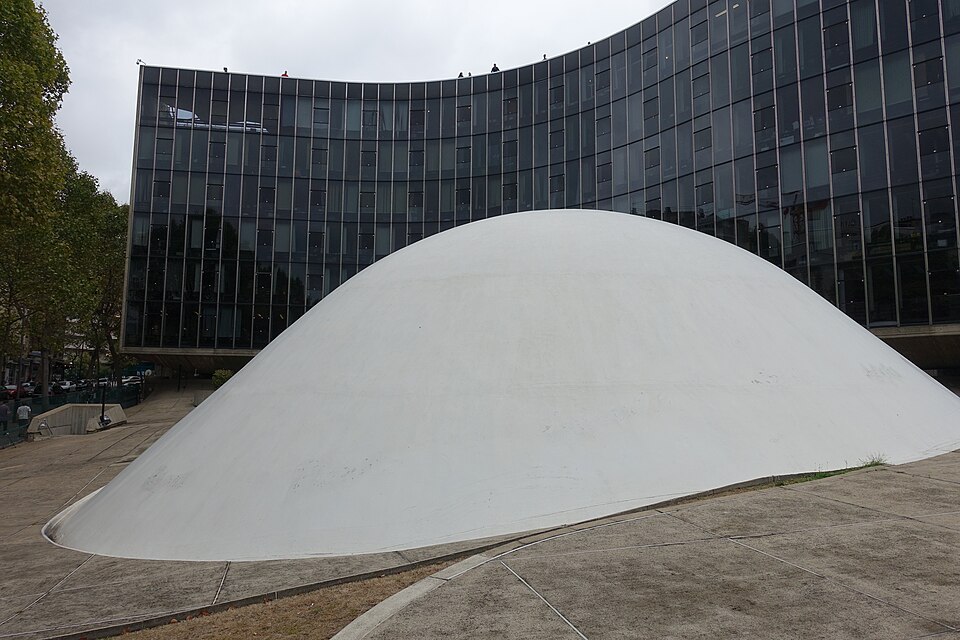
Headquarters of the French Communist Party: A Piece of Brasília in Paris
Long before the Mitterrand-era “Grands Travaux, ” the French Communist Party commissioned a highly symbolic headquarters in the early 1970s.
Oscar Niemeyer, a committed communist and one of the great masters of modernism, was entrusted with the project. The white dome is the centerpiece of this organic architecture, a true manifesto of Brazilian modernism in Paris. Long inaccessible to the public, the building was rediscovered in the 2000s and listed as a historic monument in 2007. Today it hosts exhibitions, concerts, film shoots, and cultural events.
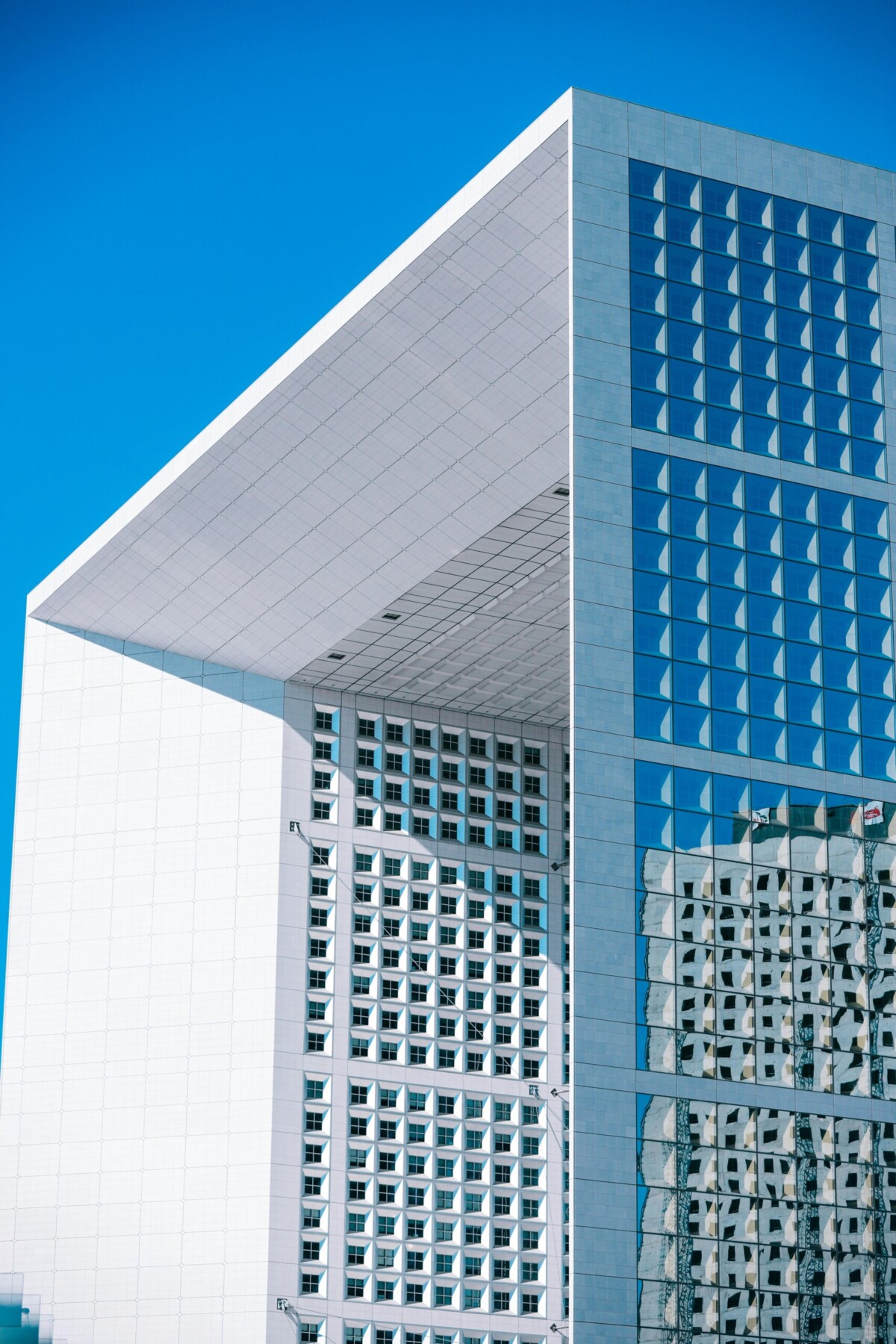
Johan Otto von Spreckelsen: The Grande Arche, Extending the Historic Axis
Still under President Mitterrand, the decision was made to extend the historic Louvre–Étoile axis all the way to La Défense.
The international competition selected an almost unknown architect: Danish designer Johan Otto von Spreckelsen, who sadly passed away before the building was completed. His project added a third monumental arch to western Paris, a perfect, open cube known as the Grande Arche.
The Grande Arche is not perfectly aligned with the historic axis; it is slightly offset. Existing infrastructure at the time, highway tunnels and rail lines, made it impossible to place the foundations of a 110‑meter cube directly on the axis.
Frank Gehry: The Fondation Louis Vuitton, a Vessel in the Bois de Boulogne
After designing the American Center in 1994 (later transformed into the Cinémathèque française), Frank Gehry was commissioned to imagine the Fondation Louis Vuitton, intended as a major destination on the Paris art circuit.
A devoted Francophile, Gehry drew inspiration from the Grand Palais, the nearby Jardin d’Acclimatation greenhouses, and his passion for sailing. He created twelve glass “sails” floating above a water basin. The building’s complexity led to the filing of more than thirty patents, mostly related to the attachment systems for the glass sails.
Since its opening in 2014, the foundation has welcomed more than eight million visitors. The year 2025 was a record year, with over 1.5 million visitors, driven in part by the David Hockney exhibition.
Other Notable Contributions
To these major projects, one can add the interventions of:
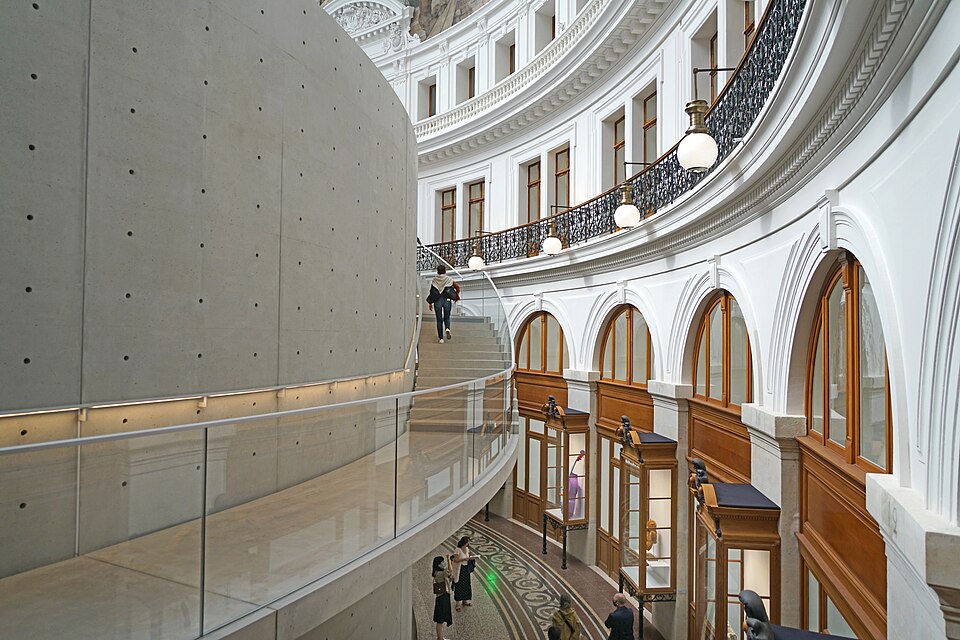
- Tadao Ando (UNESCO Meditation Space, Bourse de Commerce – Pinault Collection)
- Renzo Piano (Paris Courthouse)
- Bernard Tschumi (Parc de la Villette)
- Jakob + MacFarlane (Cité de la Mode et du Design)
Building in Paris is complex, but it is also a reward, a challenge shaped by beauty, offering in return global visibility.
These architects have shown that modernity is not a threat to Paris, that the city is not shaped solely by its past, but also by those who come to dream it anew.